Its remains offer insight into the city’s history, its relationship with neighbouring settlements and the different civilisations that once inhabited the area.
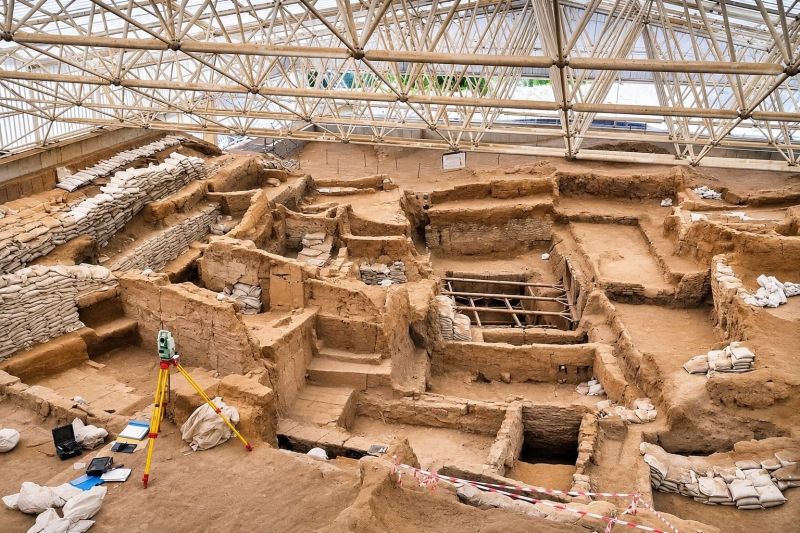
Rescue excavations and cleaning works carried out by the Konya Museum Directorate have brought several significant discoveries to light, including a necropolis and the remains of a church. These findings provide valuable clues about the city’s development and its use across different historical periods.
Astra also occupies an important place in the historical geography of the region. The ancient cities of Isaura and Astanada, two major settlements of the Isaura State, can be seen from Astra with the naked eye. Together, the three cities form a distinctive triangular arrangement, reflecting the area’s historical settlement pattern.
The city’s name was identified through inscriptions first discovered by Sterrett in 1885. Further studies of these inscriptions confirmed that the settlement was known as Astra. They also revealed that the city had its own administrative structure while maintaining its connection to Isaura.
Surrounded by walls made of rubble stone laid without mortar, Astra served as a settlement during the Hellenistic, Roman and Byzantine periods. Remains of residential and other civil structures from these eras can still be found along the eastern, southern and northern slopes of the hill, offering a glimpse into how the city was organised and inhabited over time.
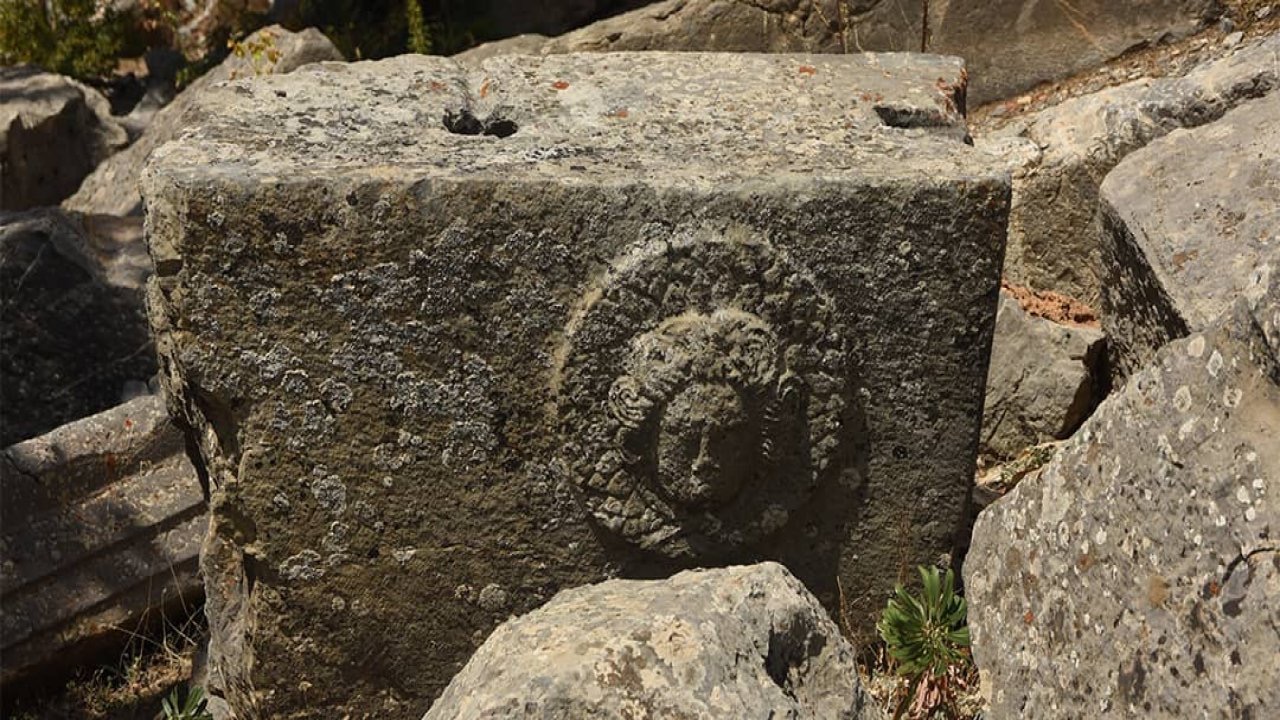
The ancient city’s necropolises, located to the east and west, provide further evidence of its past burial traditions. Cremation urns, grave stelae and tomb lions are among the remains found in these areas. Across the site, relief-carved stones, inscriptions, architectural fragments and lion sculptures also stand as reminders of the people who once lived here.
Today, these archaeological remains make Astra an important site for understanding the history of the Isaura region. Its inscriptions, burial grounds, architectural structures and stone monuments preserve fragments of a past that continues to be explored.