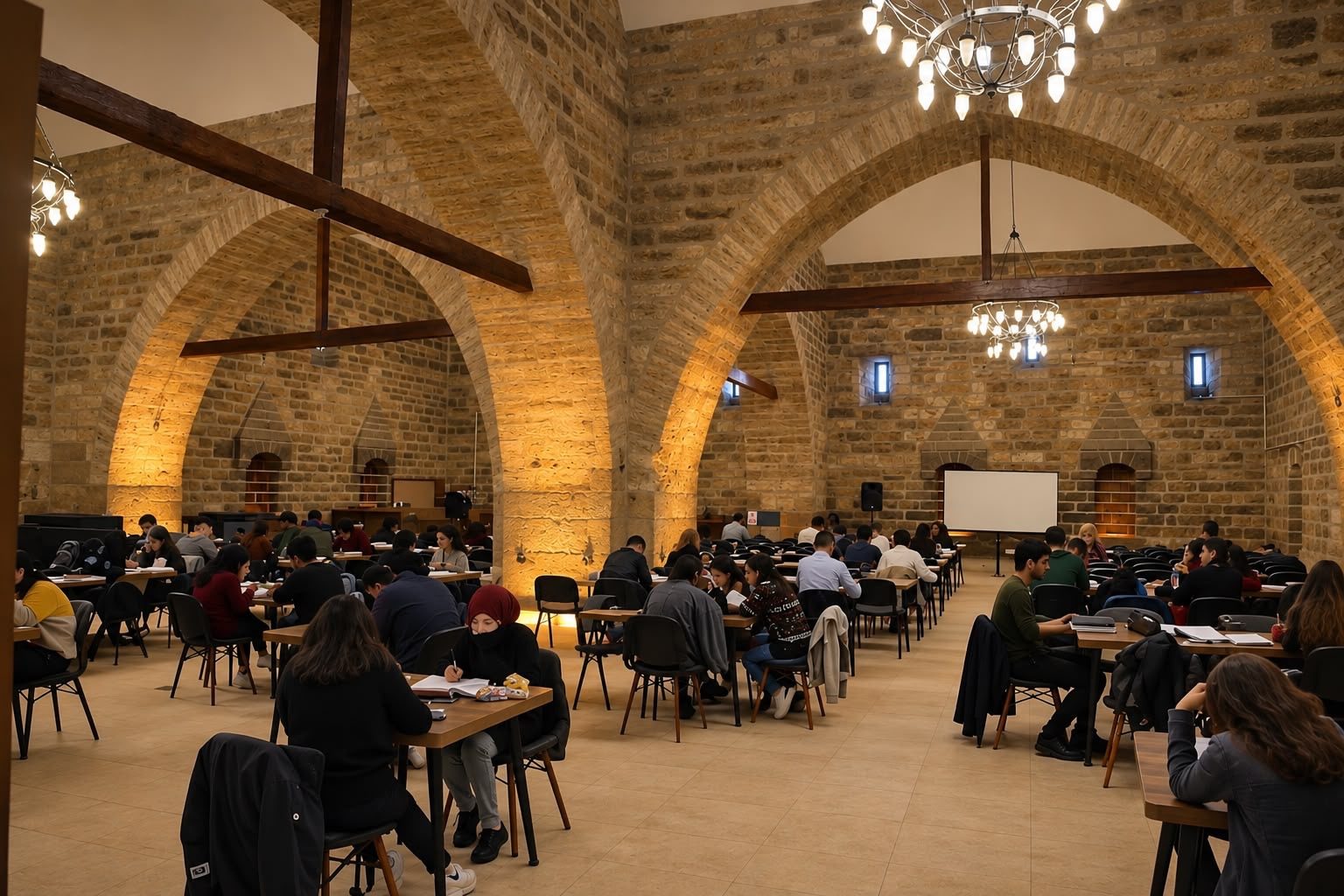
Listed among the works associated with the renowned Ottoman architect Mimar Sinan, the historic building stands out for its distinctive architectural features and its transformation over the centuries.
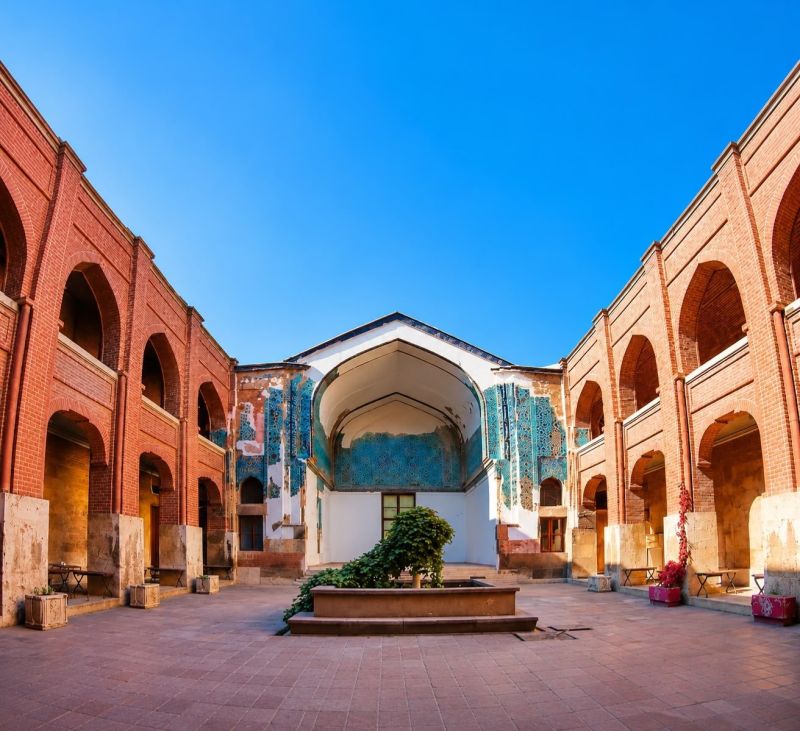
Situated in Ereğli’s town center, the Rüstem Pasha Caravanserai reflects the architectural characteristics of the Ottoman period through its layout and construction materials. Its main section consists of 11 vaulted spaces covered with barrel vaults, while the building also includes several smaller vaulted chambers, guest rooms and an open courtyard that no longer survives.
Only two entrances remain from the former courtyard, one on the eastern side and the other on the western side. Known as the Baghdad Gate and the Konya Gate, respectively, these entrances offer a glimpse into the building’s original layout.
The main entrance is located in the center of the southern façade and leads to the former stable section. It features a pointed arch and a barrel-vaulted passage, with a smaller vaulted chamber on either side. The guest rooms, known as tabhane in Ottoman architecture, are lower than the main section and covered with east-west oriented barrel vaults. Additional rooms extend westward from one of the side chambers, providing access to both the guest rooms and adjoining sections.
Four stone piers stand at the center of the building, connected to one another and to the walls by arches. Symmetrically arranged fireplaces are built into the walls, while narrow slit windows in the walls and vaulted ceilings allow natural light into the interior.
The building was constructed using cut stone and brick. The walls are made of cut stone, while brick was used in the narrower surfaces of the vaults. The roof is covered with lead.
The Rüstem Pasha Caravanserai is also listed among the works associated with Mimar Sinan, one of the most prominent architects of the Ottoman Empire. Rüstem Pasha died in 1565, and the caravanserai is believed to have been built after his death in accordance with his will.
Today, the historic building serves as a public reading and social space known as a Millet Kıraathanesi, preserving its place in the daily life of Ereğli.