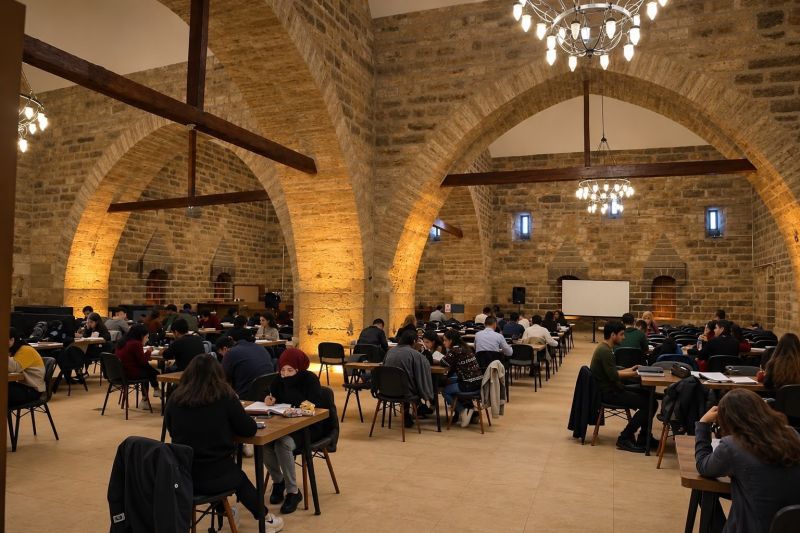
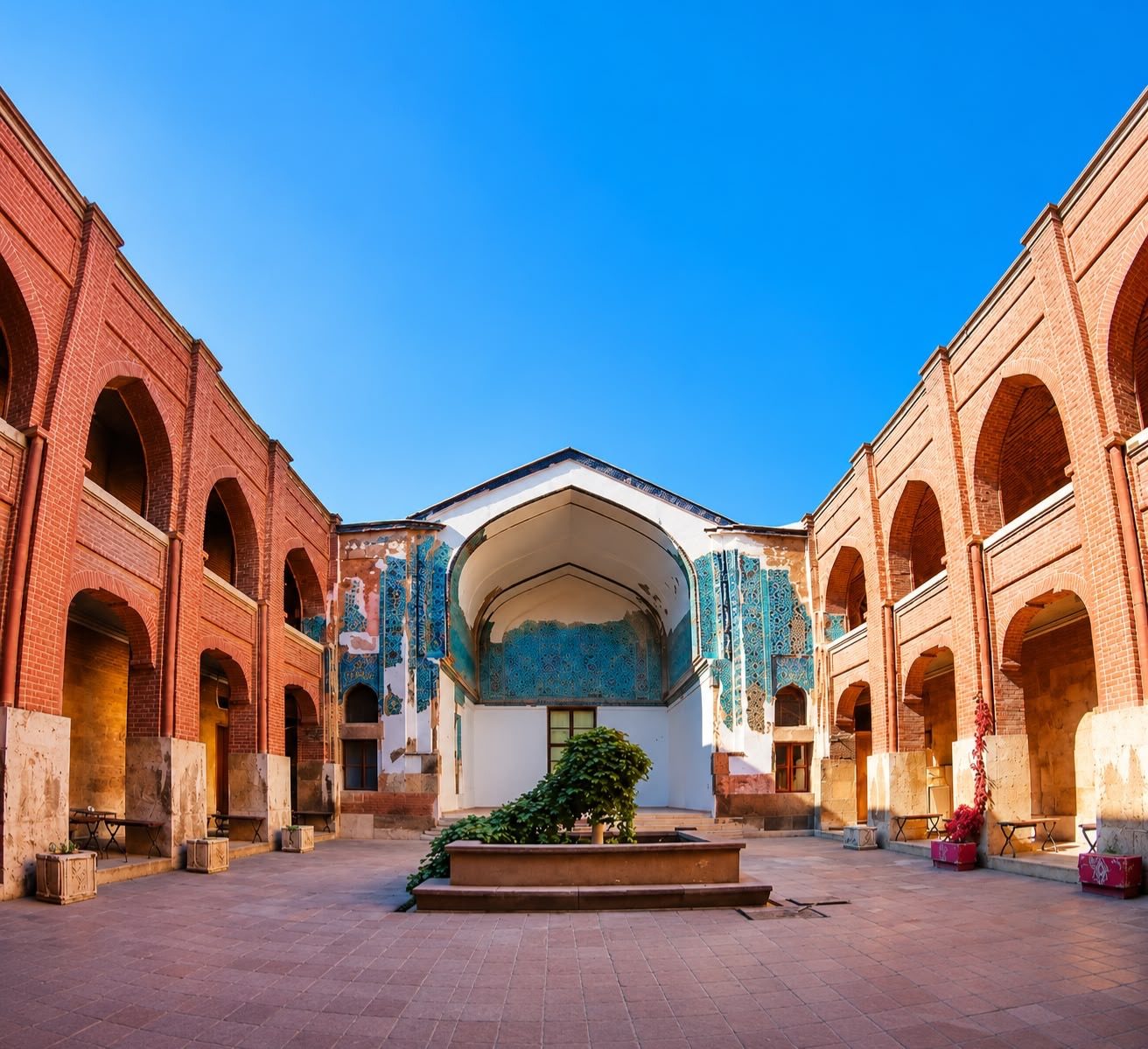
Built in 1242–1243, the madrasa was commissioned by Bedreddin Muslih, a prominent figure in the Seljuk administration, to provide education in Islamic law.
Bedreddin Muslih was known for his position at the Seljuk court and served as a lala, a tutor and guardian responsible for the education of a young prince. He was also among the officials close to Sultan Alaeddin Keykubad II.
The tomb stands beside the main entrance of the madrasa and contains three stone sarcophagi. One is traditionally associated with Bedreddin Muslih, while the other two are believed to belong to members of his family. However, the identities of those buried there have not been confirmed.
Sırçalı Madrasa takes its name from the glazed tiles that decorate its interior. The building features an open courtyard surrounded by covered galleries, with turquoise and cobalt-blue tiles adding colour to its walls and arches. Its entrance is also notable for its detailed stone carvings and geometric patterns.
The tomb and the madrasa together offer a glimpse into the Seljuk period, when religious education, architecture and decorative arts played an important role in Konya’s cultural life. Today, the site remains one of the city’s historical landmarks.