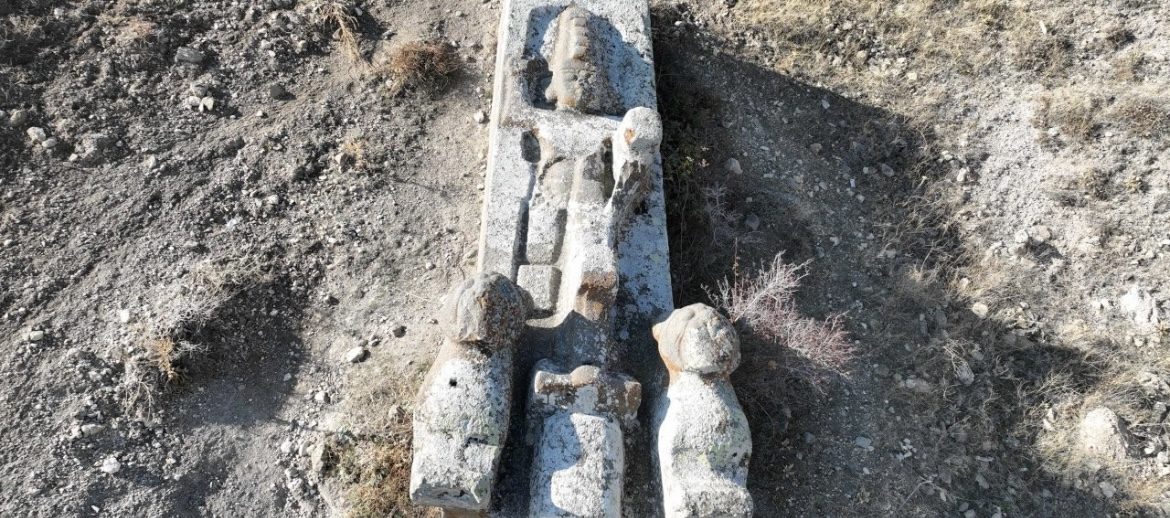
The Fasillar Monument, located in the village of Fasillar in Konya’s Beysehir district, is considered one of the largest rock monuments in Anatolia and stands as a unique legacy of the Hittites.
Dating back to the 13th century BC, this colossal monument is carved from a single basalt block, measuring approximately 8 meters in length and weighing around 70 tons. Its surface features three striking figures that reflect the Hittite belief system: at the top is the storm god Tarhunza, beneath him a mountain god, and at the base, two opposing lions. These details reveal the deep respect the Hittites had for the forces of nature and their connection with the divine.
Also known as the Kurt Besigi (Wolf’s Cradle), the monument still lies horizontally on the ground where it was originally placed. Despite centuries of exposure to natural elements, it has preserved its original form and offers visitors a journey back thousands of years. A full-scale replica of the monument is displayed in the garden of the Museum of Anatolian Civilizations in Ankara, allowing those who cannot visit the site to experience its grandeur up close.
For history and culture enthusiasts exploring Beysehir and its surroundings, the Fasillar Monument is a must-see destination. A visit to the area provides a unique opportunity to discover the Hittites’ artistry, religious rituals, and mastery of stone carving. Witnessing this impressive monument is an unforgettable experience for anyone wanting to feel the rich history of Konya and connect with the ancient past of Anatolia.