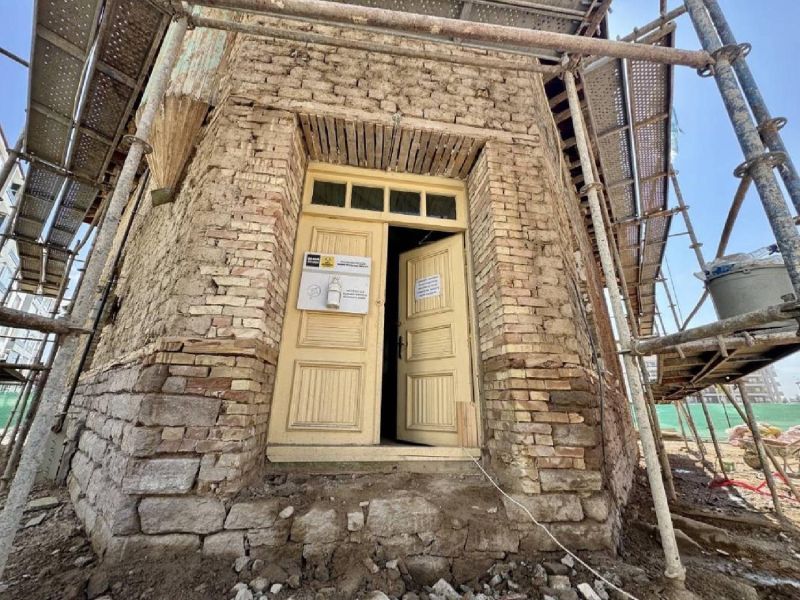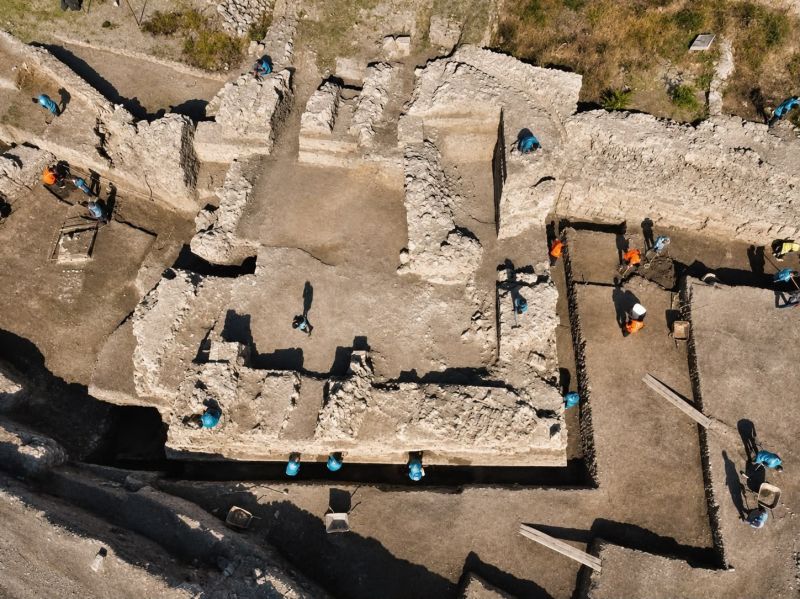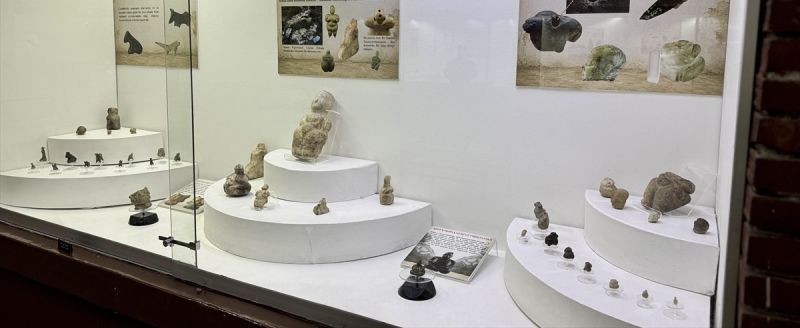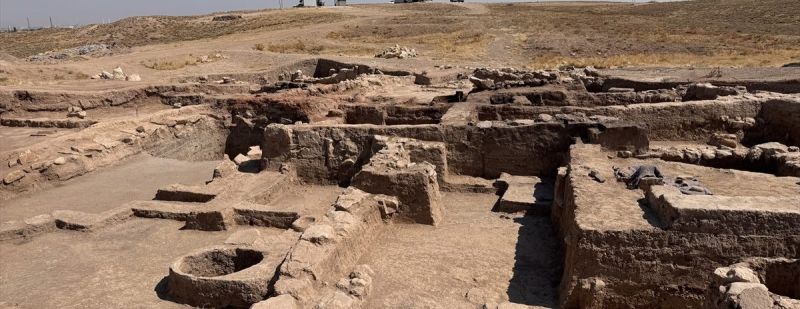
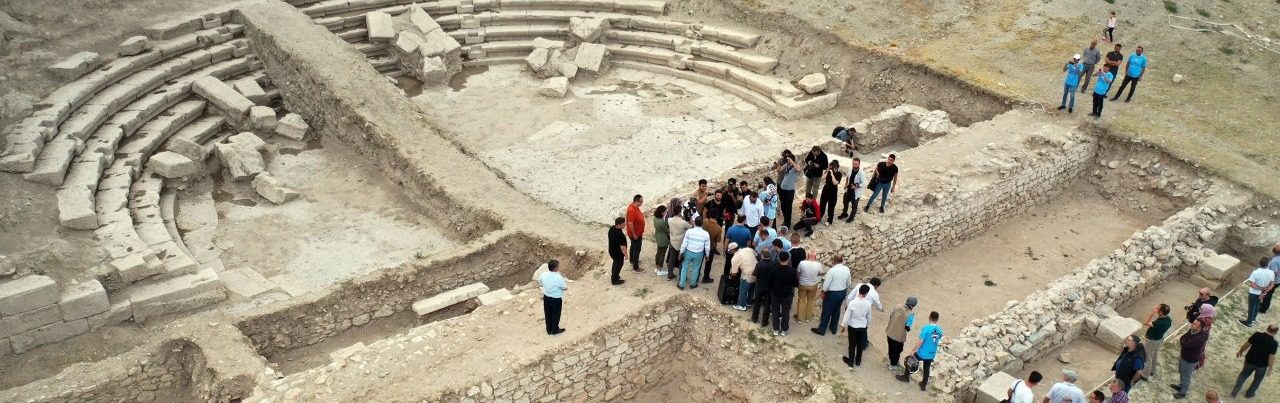
Excavations at the 5,000-year-old ancient city of Savatra, also known as "Konya's Cappadocia," are progressing rapidly. Selçuk University Rector Prof. Dr. Hüseyin Yılmaz visited the site to examine the work in person.
The ancient Roman city of Savatra, noted as the first settlement in Anatolia to include the term "Turk," highlights Konya's historical and cultural richness with its 5,000-year heritage.
An important stop along bustling trade routes in ancient times, this ancient city holds a unique place as the first location in Anatolia to mention the name "Turk."
Rector Prof. Dr. Hüseyin Yılmaz stated that the work carried out by Selçuk University at the ancient city of Savatra provides insights into the cultural, social, and architectural structure of the ancient period.
Yılmaz said, “Savatra is one of the rare and well-preserved ancient cities of the Roman Empire in Anatolia. The work in this area is significant not only for uncovering Turkey's archaeological heritage but also for gaining new insights into daily life in the ancient world. Selçuk University’s contributions play a critical role in preserving, restoring, and unearthing the remains of the ancient city. These studies, in particular, provide valuable information on Roman-era construction techniques, architectural arrangements, and the blending of local and imperial cultures. Additionally, with the participation of students and researchers, it serves as an academic training ground that fosters the development of young archaeologists. I believe that such projects by our university are essential for preserving historical and cultural heritage and for revitalizing tourism.”
Significant findings have been uncovered in the excavations that began in 2021, led by Assoc. Prof. Dr. İlker Işık, Head of the Department of Conservation and Restoration of Cultural Properties at Selçuk University’s Faculty of Letters.
In 2022, an inscription from the early pre-Islamic Turkish period was discovered, featuring the term "Turk" and the phrase "Türkoğlu" written in the Greek alphabet.
The inscription, dating back to the 9th-11th centuries AD, serves as evidence of Turkish presence in Anatolia prior to 1071. In 2023, additional discoveries were made, including a mass grave of children from the 4th or 5th centuries AD, a 1,800-year-old victory wreath, an altar with soldier and banner reliefs, churches, and well graves. This year, new church structures and graves have also been uncovered.