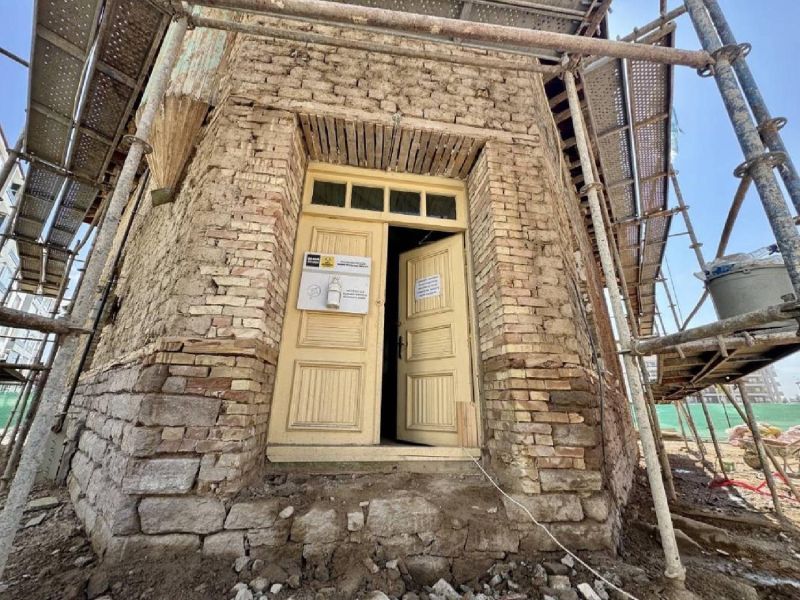
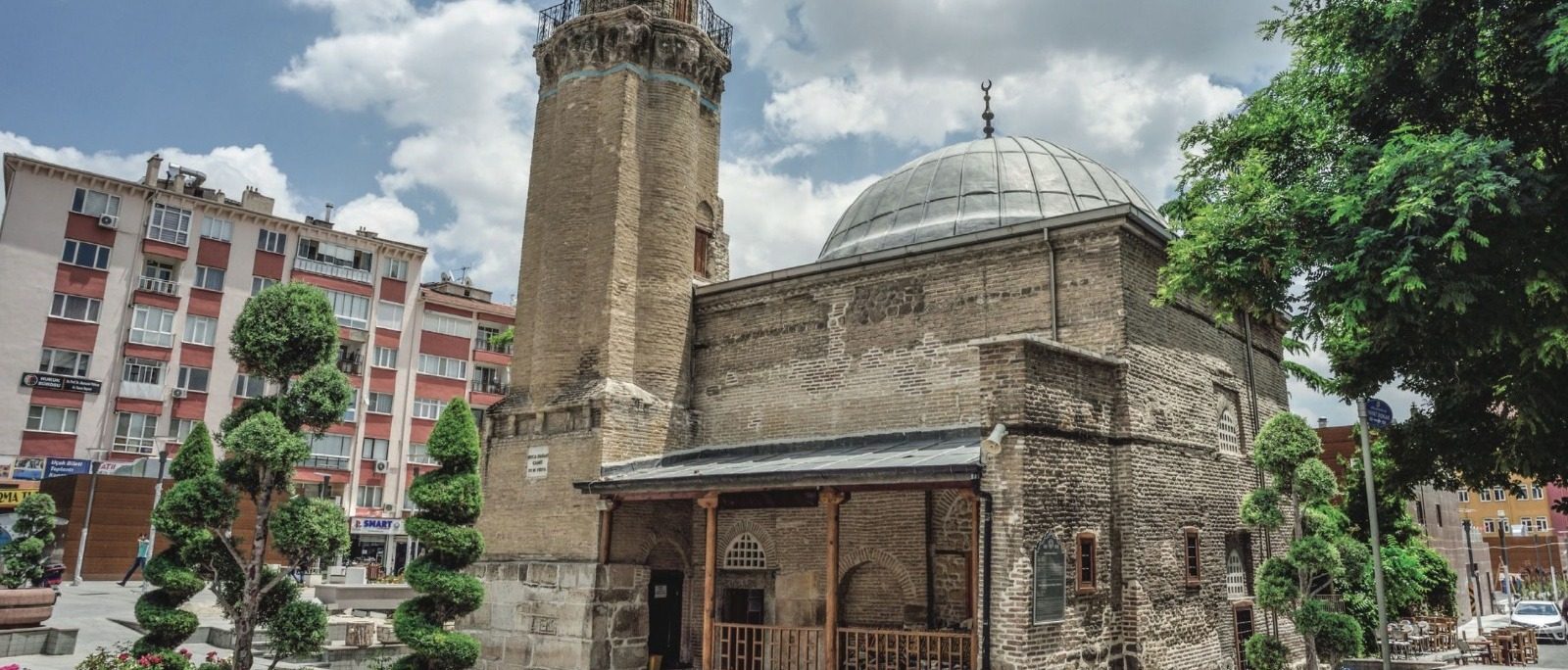
Hodja Hasan Masjid is located at the corner of Kazım Karabekir Avenue and Hayat Street in the Abdülaziz neighborhood of Meram district.
The masjid lacks a construction inscription; according to historic sources, it is highly likely that it was built between 1176 and 1188 when Ihtiyar al-Din Hasan served as the vizier of Sultan Qilich Arslan II.
Standing on a north-south oriented rectangular area, the masjid is a cubic structure with a dome and a latecomers’ area adjoins it on the north and a minaret on the northeast.
The west façade was built with brick over a socle of roughly worked stones. On the north of the west façade is a narrow window opening into the latecomers’ area; three windows on top of each other in the southern half open into the prayer hall; the upper two windows have a pointed arch and placed within a rectangular frame. To the north of the window in the middle of the façade is a rectangular niche.
The south façade of brickwork features rectangular windows on the lower part and these are inferred to have had pointed arches within rectangular frames originally.
The window on the upper part of the east façade, which is also of brickwork, was originally a pointed-arched one within a rectangular frame, and the rectangular window on the lower part of the façade was opened at a later date.
The doorway with marble jambs and lintel in the southeast of the latecomers’ area opens into the square prayer hall, which is surmounted with a double-walled brick dome; currently plastered over, the dome rises on four large squinches. The square is transformed into an octagon via the squinches and then into a sixteen-sided drum via eight small niches with pointed arches placed over the corners of the squinches.
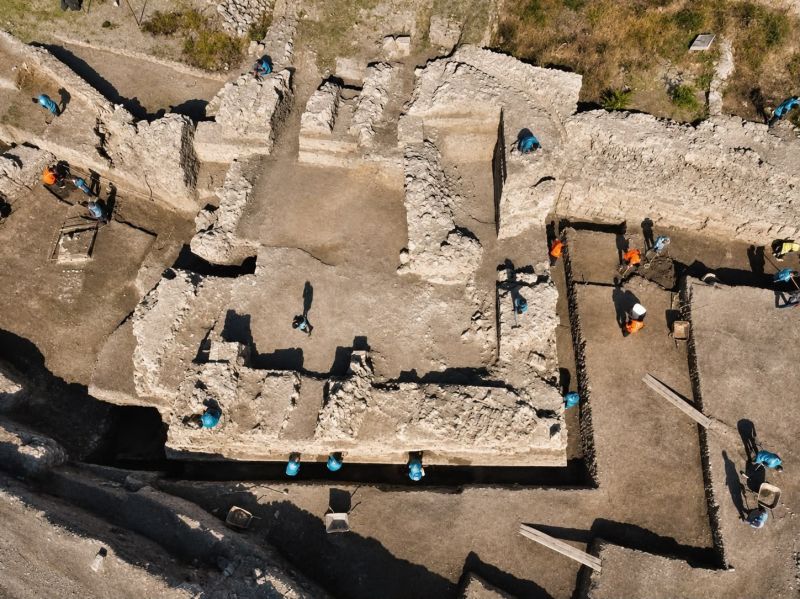
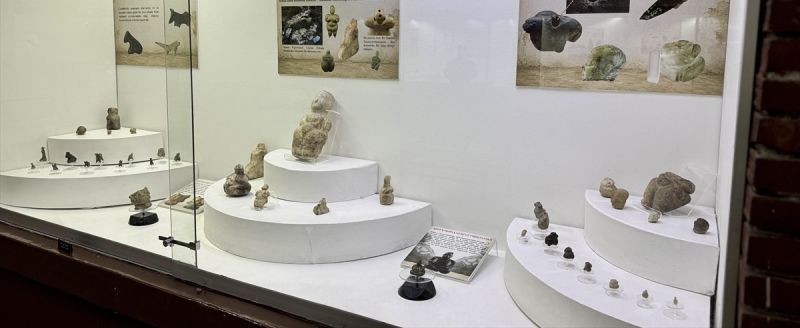
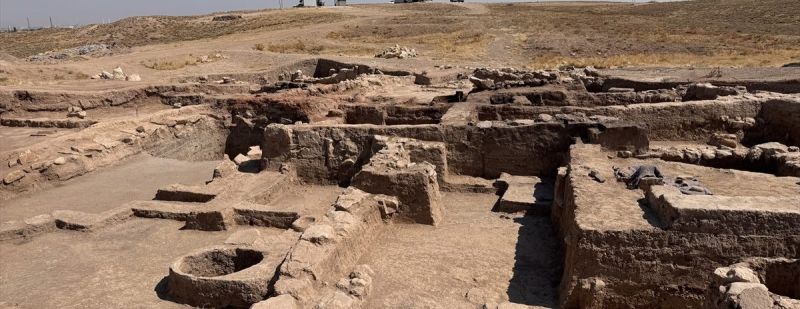
The plaster mihrab is furnished with a new muqarnas hood; in the course of excavations to remove later flooring in 1991 benches faced with tiles and extending along the qibla wall were uncovered together with the lower part of the original plaster mihrab; some fragments indicated that the plaster mihrab was originally inlaid with tiles. The excavations also brought to light plaster reliefs decorated with calligraphy or floral motifs as well as the earliest plaster latticework fragments inlaid with light red-brown colored forged glass used at a pious foundation monument.