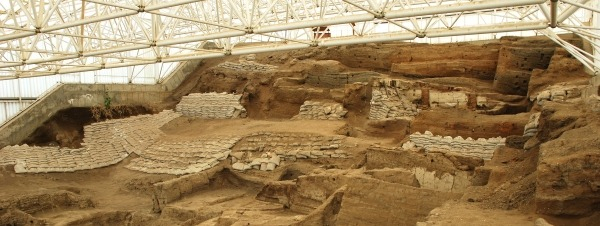
Çatalhöyük Neolithic City, which witnessed important social changes and developments such as the beginning of agriculture and hunting, along with the transition to settled social life, which is an important stage in the development of humanity, is located on an area of approximately 14 hectares in the Southern Anatolian Plateau.
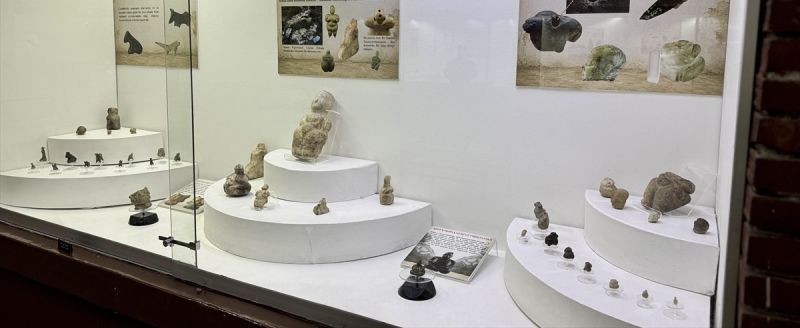
The taller East Mound of the Neolithic City of Çatalhöyük, which consists of two mounds, dates between to 7400 and 6200 BC and contains 18 Neolithic settlement layers. In these layers, there are murals, reliefs, sculptures and other artistic elements that symbolize social organization and the transition to settled life.
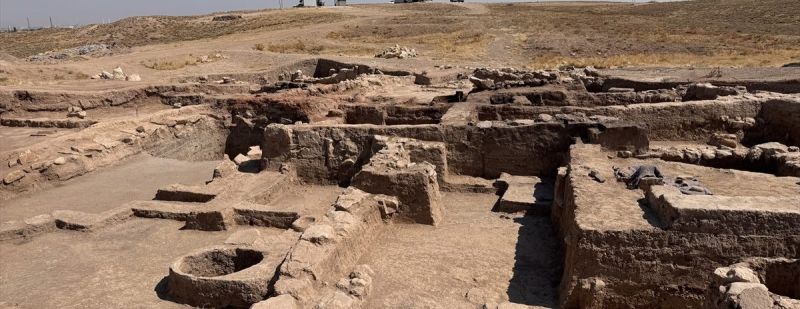
The West Mound shows cultural characteristics belonging to the Chalcolithic Period, dated between 6.200 and 5.200 BC. With these features, Çatalhöyük is an important proof of the transition from villages that have existed in the same geography for more than 2000 years to urban life. The settlement in Çatalhöyük, which does not have a street, exhibits a unique feature with the adjacent houses that are entered through the roofs.
Although other Neolithic sites have been found in the Middle East and Anatolia, the Neolithic City of Çatalhöyük is of extraordinary universal value for its unique combination of the size of the ruins, the density of the living community, strong artistic and cultural traditions and continuity over time.
Çatalhöyük Neolithic Ancient City is located within the borders of Çumra District of Konya and 10 km east of the district.
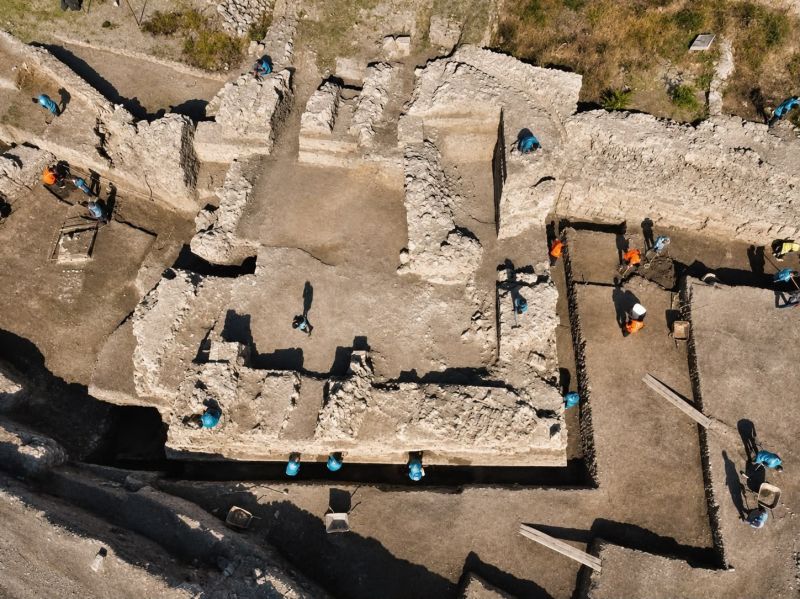
The mound is in the form of a hill with two flats of different heights. Due to these two elevations, it has taken the title of fork. Çatalhöyük was discovered by J. Mellaart in 1958 and excavated in 1961-1963 and 1965. As a result of the research on the western slope of the high hill, 13 building levels were unearthed.
The earliest settlement level (1) is dated to 5500 BC. This dating, made by style critique, has also been confirmed by the C14 method. It is a center that sheds light on the history of humanity with the first settlement, the first house architecture and the original finds of the first sacred structures.