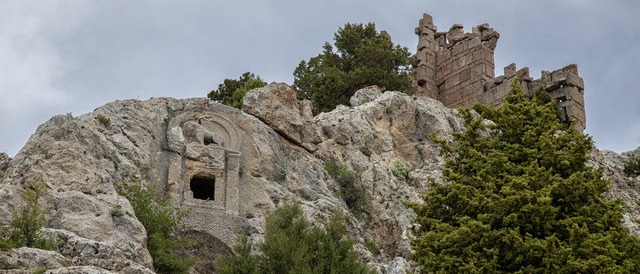
The Zengibar Castle, which has mostly kept its treasures hidden underground, awaits restoration, exciting archaeologists and history enthusiasts.
Located in the mountainous region between the Ulupınar and Hacılar settlements in the Bozkır district of Konya, the "Zengibar Castle," also known as "Isaura," was one of the significant cities of the Hellenistic period. In ancient times, Isaura served as the capital of the region and was first discovered by the British traveler W. J. Hamilton in 1837.
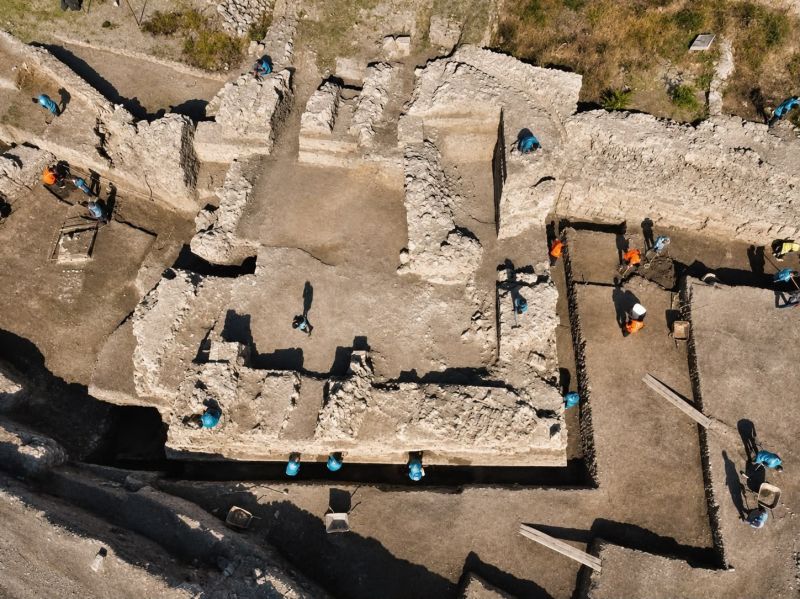
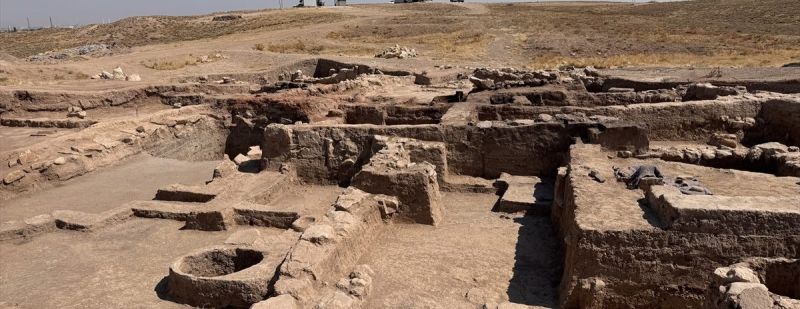
Among the remnants of the province of Isaura, which was one of the important provinces of Rome, you can find the city walls, towers, theater, triumphal arch, church, and rock-cut tombs.
The ancient city located between the Hacılar and Ulupınar neighborhoods in the Bozkır district of Konya is situated at an altitude of 1,860 meters on the extension of the Taurus Mountains. Throughout history, Zengibar Castle, used by the Hittites, Persians, and Romans, continues to attract the attention of both domestic and foreign tourists, despite many of its structures remaining unexplored to this day.
The gate located to the south of the castle stands at a height of 4 meters. This gate is constructed in a pentagonal and hexagonal architectural style and is completed with an arch between two towers, one of which is entirely collapsed. It opens onto the main street. Visitors who follow the street can reach the largest building in the city, which was later used as a church, along with a triumphal arch.
Many of the stones in the city feature high-relief carvings of wreaths, helmets, knee guards, swords, shields, and arrows.
Konya, its history hosting many civilizations in the past, offers a wealth of historical sights wherever you turn. These historical structures hold the secrets of the past within them, waiting to be explored.
Access to the region is provided via the Konya-Bozkır road. There are directional signs in the Hacılar Neighborhood that can guide vehicles to the ancient city. Zengibar Castle, with its impressive examples of Roman-era stone craftsmanship, features architectural structures such as a theater, triumphal arch, church, aqueducts, and more.