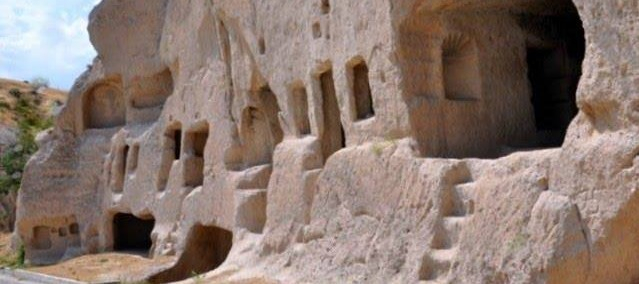
Konya has a rich collection of unique historical artifacts that date back to ancient times. One of these remarkable pieces is the Ak Monastery, which was built during the Byzantine period. Numerous pieces of information can be found about this monastery. Based on the research conducted, it has been discovered that there is a sacred well inside the monastery, which is believed to be a miraculous creation emerging below ground level.
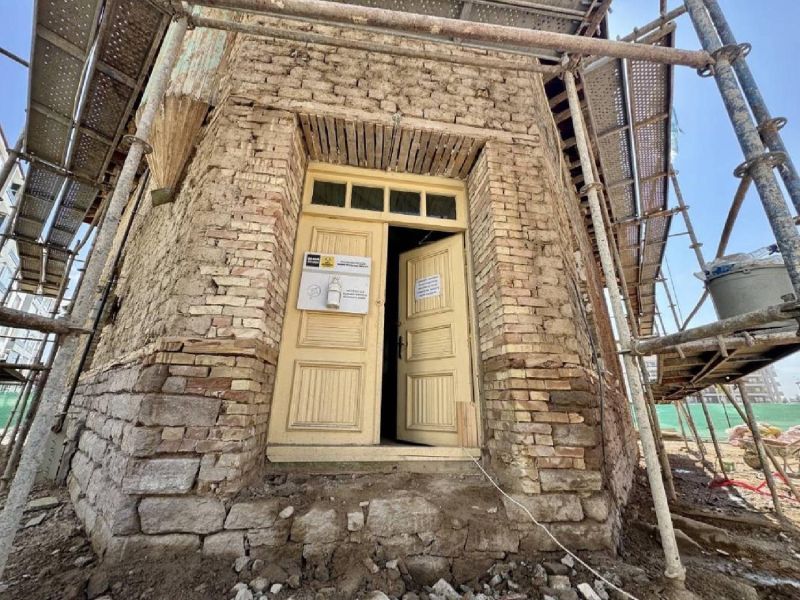
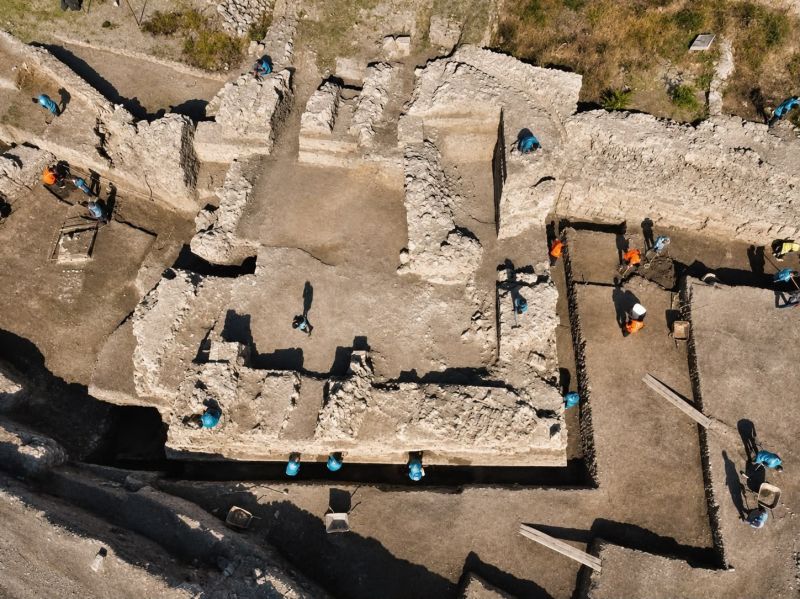
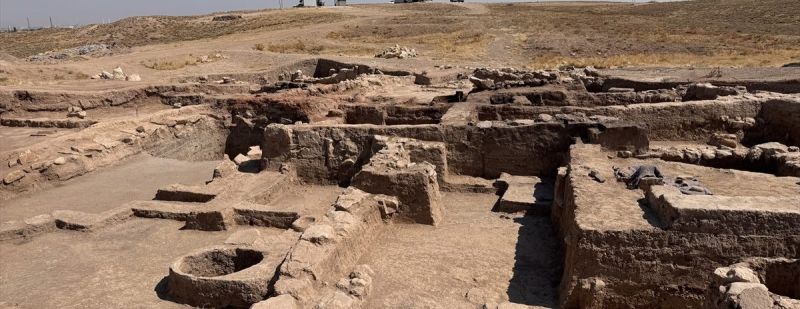
The monastery, also known as Hagios Chariton or Eflatun Monastery, is located at the foot of Mount Takkeli, approximately 4 km west of Konya, within the boundaries of a military zone. Presently, the monastery contains two churches carved into the rocks, a holy spring, a monk's cell, various chambers, and a podium, all of which can be observed.
The monastery, believed to have been founded by Saint Chariton, who lived in the late 3rd century and early 4th century, underwent renovations in 1067 and 1289, as evidenced by two inscriptions. The second renovation took place during the reign of Sultan Mesut. The dating of the main church to the 9th or 10th century indicates the development of the monastery over time. According to the investigations of researchers, the monastery is said to contain a large church dedicated to the Cave of Mary, six or seven chapels, monk cells, and a sacred well where Saint Chariton is believed to have performed a miraculous act below ground level.
Various travelers have described the monastery as being in ruins at the beginning of the 20th century. They have also mentioned that Orthodox Christians visit the monastery during the annual celebration of the Khariton Festival, which takes place on September 28th. Additionally, the monastery holds significance for the Muslim community. According to belief, a miraculous event occurred when a person, believed to be Saint Chariton, the son of Hz. Mevlâna (Rumi), was saved in a miraculous manner after falling from the cliff on the hill where the monastery is located.
A simple mosque with a rectangular plan and a plain mihrab (prayer niche) was built within the monastery, and it was visited annually by the head of the Mevlevi dervishes, known as the Çelebi Efendi. The main church of the monastery has a four-pillared, enclosed Greek cross plan. It can be entered through a door on the southern facade and has three semicircular apses. The church, covered with a barrel vault, is illuminated by two windows on the southern facade. Although the church exhibits rough stone craftsmanship, no traces of frescoes have been identified within it.
The front facade of the monastery, created by smoothing the rock, features a large relief of a cross with a hammered motif and small crosses in the arms of the cross. Researchers have found six inscriptions within the monastery. Currently, two pieces with inscriptions are located inside the church, and a tombstone with two inscriptions is housed in the Konya Archaeology Museum. The whereabouts of the two inscriptions that were said to be located at the entrance of a church could not be determined.