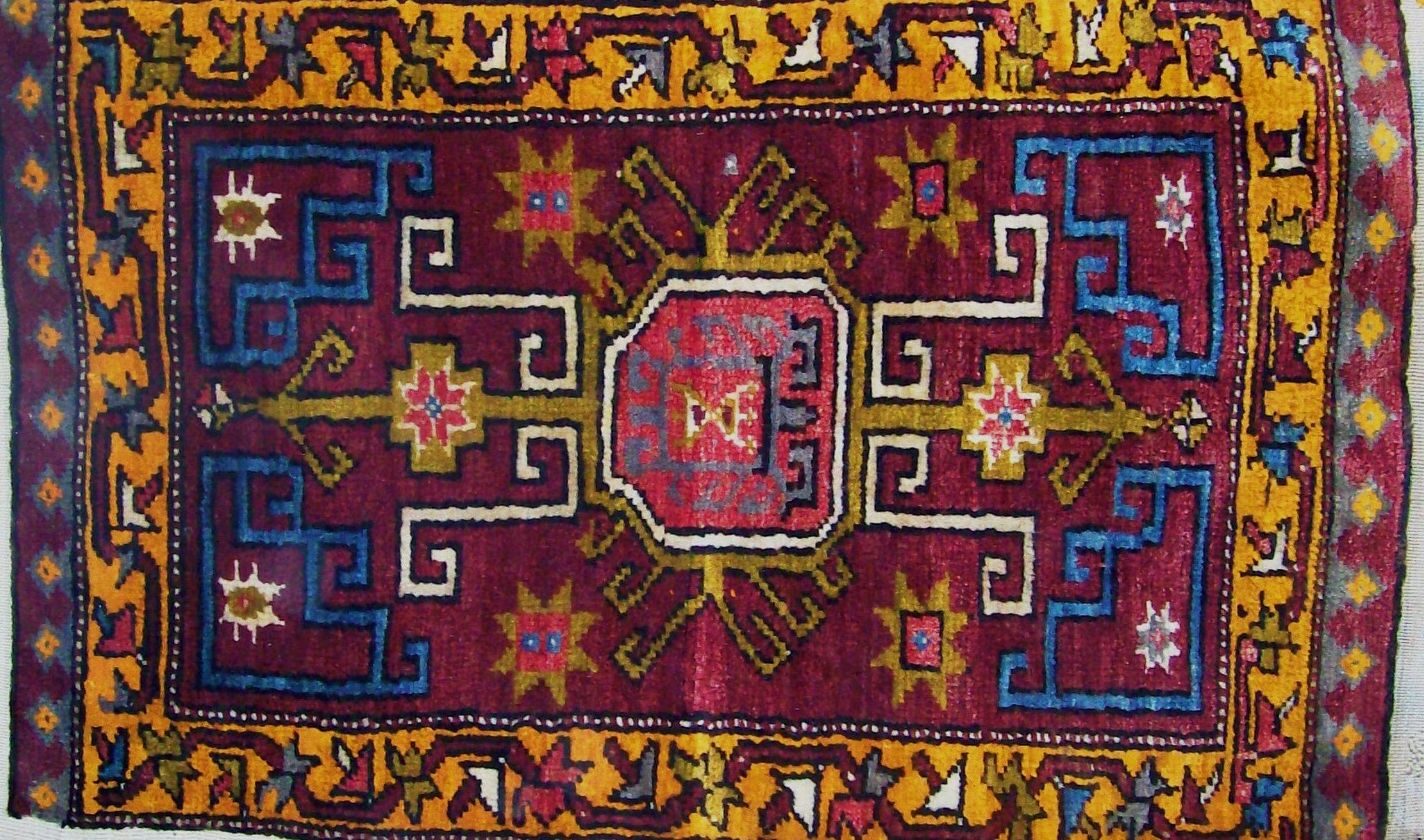
This unique carpet weaving tradition in the Selçuklu district has a rich history, and despite its decline in production today, it still has a special place in Turkish cultural heritage.
The carpets of Başarakavak were made with a wrapping wooden loom, and the yarns were obtained from local sheep, spun into yarn in the city of Kirman. The carpets were woven with the Turkish knot, and a medium quality knot density was used in production. The carpets came in different types, including floor carpets, runners, prayer rugs, bags, and especially pillows, and there was no standard size for any of these types.
The design compositions of Başarakavak carpets were characterized by geometric, botanical, and object motifs. The wefts' geometric form dominated the pattern understanding, and the carpets' colors were mainly natural, with shades of red, blue, and green. The carpets were woven in the winter months, and due to the climatic conditions of the region, they were primarily used as warm and comfortable home textiles.
Başarakavak carpets were unique in their weaving techniques and design elements. Despite the decline in production, they continue to influence the weavings of neighboring regions, particularly the Derbent and Küçükmuhsine regions. These carpets stand as a symbol of Turkish cultural heritage, reflecting the rich history and craftsmanship of traditional Turkish weaving.