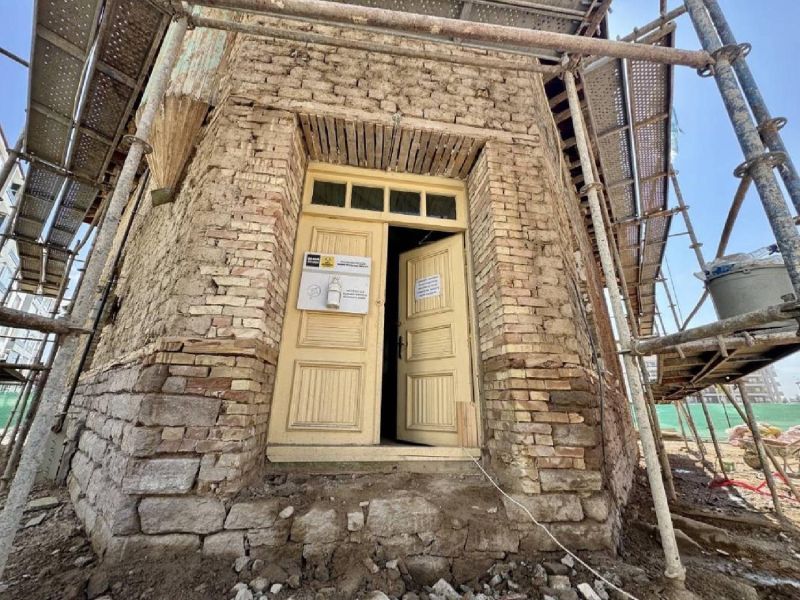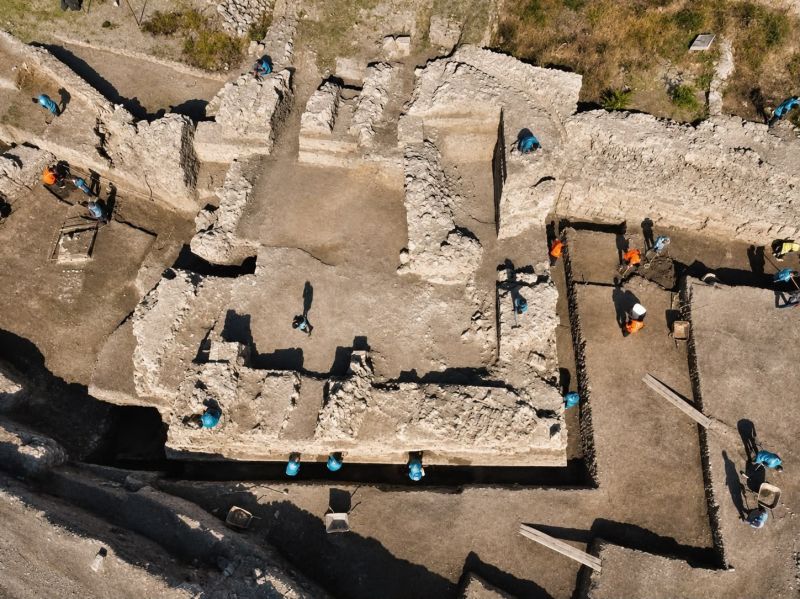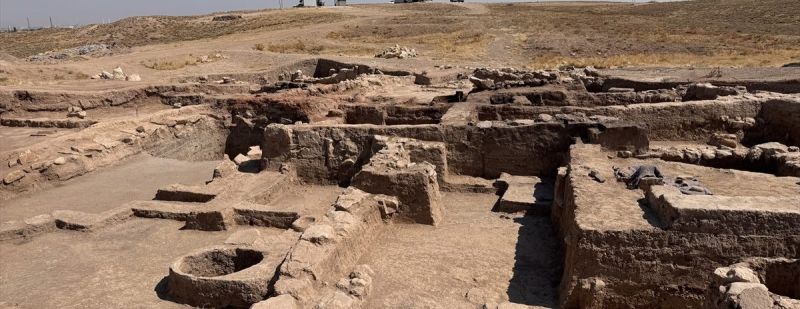
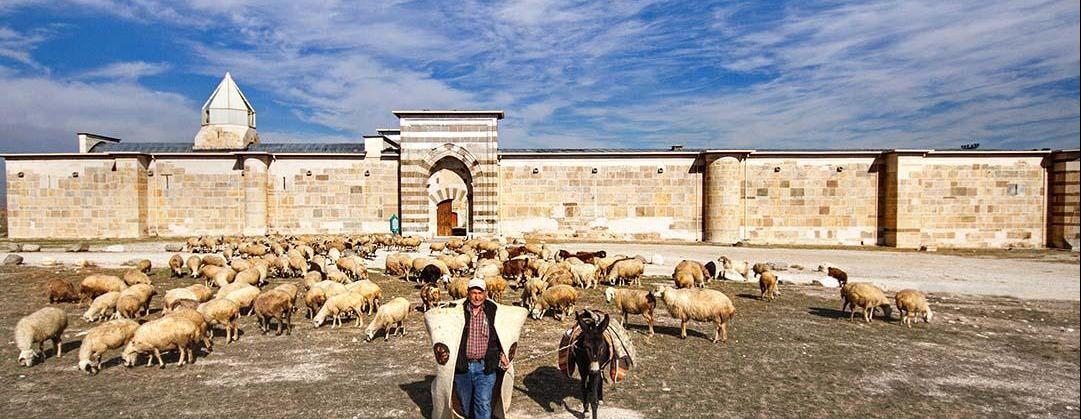
The Zazadin Inn, which has the distinction of being the largest caravanserai built by the Anatolian Seljuk State in Konya, draws attention with its architectural beauty.
Hundreds of caravanserais, built by the Seljuks on many routes in Anatolia, draw attention as the most important historical artifacts that reflect the importance the Turks gave to trade, their fine architectural richness, hospitality and social state understanding.
Located 22 kilometers from Konya, near the Tömek Village on the Aksaray-Konya highway, Zazadin Inn is known as one of the most beautiful structures of the Seljuk caravanserai network. The inn, which fascinates people with its Seljuk motif ornaments and its splendor, which is entered through the crown door, has 24 rooms, including a summer and winter section, as well as a small mosque, Turkish bath, warehouse and stables.
It is stated in the historical records that the construction of the Zazadin Inn began in 1235 during the reign of the Anatolian Seljuk Sultan Alaeddin Keykubat I, and was completed in 1237 during the reign of his son, Gıyaseddin Keyhüsrev II.
Domestic and foreign tourists visiting Zazadin Inn, which is shown as one of the best examples of Seljuk period stonework with the white and light brown cut stones on its wall, feel the elegance of the place.
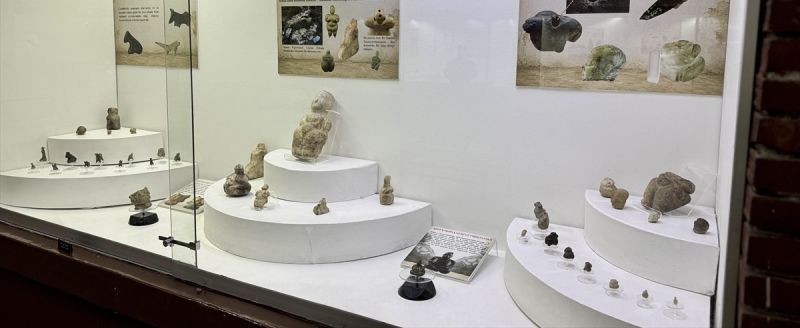
Tourism operator Hikmet Çetiner reminded that “after they aspired to the building, which was restored in 2007, in order to contribute to the tourism potential of the city, they have recently brought it into tourism.” He said that “Zazadin Inn can be an important destination as it is close to the Konya-Aksaray highway. This place is ready for tourism. I am a cultural and tourism publisher. This was a forgotten caravanserai. It is shown as one of the most important Seljuk works in Turkey. We aim to make this an important destination and so have brought it to tourism. We have turned this place into a “Living Seljuk Museum”. Objects and designs reflecting the characteristics of the period in our rooms attract the attention of visitors. Its furnishing reflects the Seljuks. This is what we aim for. By arranging our rooms such as dervişhane, kilimhane and sultan's office, we have brought this place to tourism with the concept of a museum."