The Konya Archaeological Museum was first opened in 1901 in a building at the southwestern corner of Karma Middle School. In 1927, the collection was moved to the Mevlana Museum for display and later transferred to the Iplikci Mosque in 1953. The present museum was established in 1962 and opened to the public.
The museum houses artifacts dating from the Neolithic Age through the Early Bronze Age, Middle Bronze Age (Assyrian Trade Colonies), Iron Age (Phrygian and Urartian), Classical, Hellenistic, Roman, and Byzantine periods.
I. Prehistoric Artifacts Hall
1. Neolithic Age Artifacts (6500–5300 BC)
In addition to Neolithic artifacts unearthed during excavations at Erbaba, Süberde, and Çatalhöyük, the collection includes handmade terracotta vessels, as well as arrowheads and spearheads made of obsidian and flint.
2. Early Bronze Age Artifacts (3000–1950 BC)
Artifacts from this period were mainly recovered during excavations at Sızma and Karahöyük. The museum also displays grooved terracotta vessels from the area around Lake Beyşehir, featuring the characteristic styles of the Lakes Region.
3. Middle Bronze Age (Assyrian Trade Colonies) Artifacts (1950–1750 BC)
The collection includes wheel-made terracotta vessels in a wide variety of forms, oil lamps shaped like bunches of grapes, animal-shaped vessels, bronze rings, and cylinder seals discovered during systematic excavations at Konya Karahöyük, which have been ongoing since 1952.
II. Iron Age Artifacts Hall
1. Iron Age Artifacts (8th–6th centuries BC)
The collection includes fragments of Phrygian vessels decorated with figures, discovered on Alaaddin Hill in Konya; painted Phrygian vessels in various forms found at Kıcıkışla, approximately 20 kilometers north of Karapınar district; and Urartian bronze fibulae (pins) and decorated plaques. Kıcıkışla also yielded painted Lydian terracotta vessels in various forms, found alongside the Phrygian vessels.
2. Classical Period Artifacts (480–330 BC)
This section features imported kylikes and lekythoi from Kıcıkışla with glossy black-painted surfaces, as well as an oinochoe decorated using the black-figure technique.
3. Hellenistic Period Artifacts (330–30 BC)
The collection includes plates and bowls in various forms with highly polished surfaces, as well as a fragment of a vessel mold featuring deep incised decoration.
4. Roman Period Bronze Figurines (30 BC–AD 395)
A display case contains bronze figurines of Hermes, Eros, and a bull dating from the Roman period.
III. Roman Period Hall
1. Roman Period Artifacts (30 BC–AD 395)
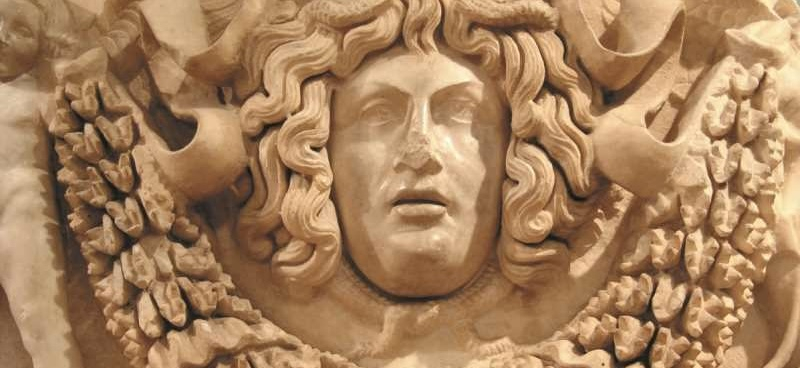
The collection includes a Sidemara-type marble column sarcophagus depicting Heracles, dating to AD 250–260, discovered in Yunuslar Village in Beyşehir district; Sidemara-type marble sarcophagi with columns and a Pamphylian-type sarcophagus decorated with garlands, dating from the 2nd and 3rd centuries AD, discovered in the necropolis of Iconium (Konya); and a statue of Poseidon.
The museum also displays terracotta sarcophagi, terracotta oil lamps, perfume and scent containers, glass tear bottles, perfume vessels, test tubes, cups, jugs, and glass bracelets from the same period, along with gold rings and earrings, gemstone ring bezels, an ivory comb, and manicure tools.
2. Byzantine Period Artifacts (AD 395–1453)
The museum displays a 6.30-by-3.50-meter floor mosaic dating to the 6th century AD, uncovered during excavations conducted by the museum in 1990 at the Tatköy Church in Sille, Tatköy. Floor mosaics discovered during excavations carried out in 1991 and 1992 at the Church Site in Alibeyhöyük, Çumra, are also on display.
A display case contains Byzantine-period bronze door knockers, cauldron handles, reliquaries, crosses, tokens, and arrowheads.
IV. Artifacts in the Museum Garden
1. Artifacts in the Portico
The portico at the museum entrance displays Byzantine-period architectural elements made of stone and marble, as well as tombstones from Sille and central Konya. It also features funerary stelae dating from the Roman period (2nd–3rd centuries AD).
2. Artifacts in the Front Garden
The front garden contains Roman-period (2nd–3rd centuries AD) statues, sarcophagi, burial chests and stelae made of stone and marble, as well as cinerary urns, funerary lions, column capitals, and inscriptions. Among these inscriptions, those referring to Iconium, Derbe, and Lystra—the cities visited by St. Paul—are particularly important.