Marbling is one of the traditional Turkish arts, in which colours are arranged on water to create patterns that are later transferred onto paper. Although its exact origins remain uncertain, the art is believed to have developed in Central Asia before spreading to Anatolia through Iran. It reached a high level of refinement during the Ottoman period, when it became an important part of book decoration and binding.
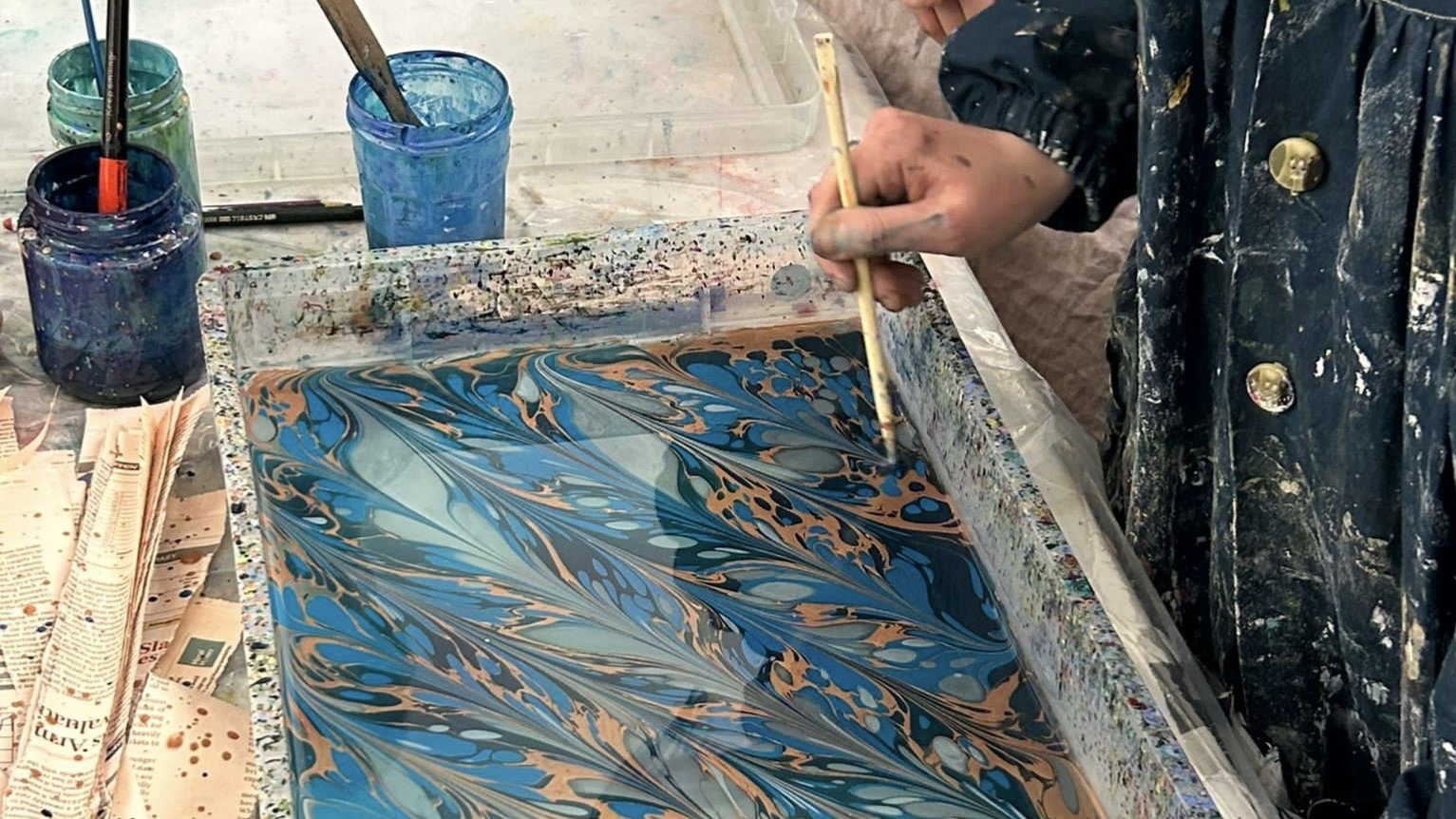
The process requires specially prepared materials and careful preparation. Artists use natural pigments, traditionally obtained from minerals and other natural sources, which are sprinkled onto water thickened with a plant-based substance called kitre. A small amount of ox gall is added to help the colours spread across the water rather than sink. Using brushes traditionally made with rose branches, artists shape the floating pigments with fine tools to create different patterns. A sheet of paper is then carefully placed on the surface to capture the design.
Marbled paper was traditionally used to decorate the inside covers and endpapers of handwritten books, often alongside calligraphy and illumination. These decorative papers added colour and detail to manuscripts while forming an important part of traditional book arts.
Konya also has a documented history connected to this craft. Examples of marbled works dating from the 18th, 19th and 20th centuries are preserved in the Yusuf Ağa Manuscript Library. The city’s long-standing tradition of calligraphy, bookbinding and other decorative arts provides a wider cultural context for the development and preservation of such crafts.
Today, marbling continues to be practised in Konya through workshops, courses and cultural activities. Municipal vocational courses and educational institutions introduce participants to the materials, techniques and traditional patterns used in the art. Exhibitions also give local artists and students an opportunity to display their work, bringing together established methods and more contemporary designs.