Turkey is a country with great historical, cultural and regional riches. After coming to Anatolia and settling down, Turks continued their development in many areas and produced countless works in artistic, cultural and educational fields. In our country, which has a deep history in the professional field, many professions have survived to the present day, and many professions have disappeared into the depths of history.
Although it is known that there are professions that are thousands of years old, professions may vary depending on the region, city and human needs. When we look at the history of professions, we see that there are professions that have survived from the Seljuks and Ottomans to the present day. While some professions have succumbed to time and technology, others have changed and survived until today. Many professions were practiced simultaneously in many regions, and professions related to clothing and food have always existed with small differences in many parts of our country.
The word “meslek” (profession in English) is derived from the Arabic root “sülûk” and means “way, path, course, style, the job people do to survive and make a living, the class they are subject to”.
When we consider the history of professions, they emerged as a result of the needs of societies. Some information can be found from various sources about the professions that human beings have been engaged in since prehistoric times. For example, in wall paintings from the Ancient Egyptians, there are scenes depicting women trying to obtain flour by crushing grain among the stones. The first barber razors were found among Bronze Age ruins around 3500 BC. In the Bronze Age, hair was clamped between a wide clamp or two animal ribs and the strand of hair in between was cut with a knife or razor. This process, which primitive people called “shaving”, was understood from the frequent presence of such pincers or bones and razors in Early Bronze Age excavations in Scandinavia and lake houses in Switzerland. Today, an obsidian Köşkhöyük Razor in the Niğde Museum is exhibited together with two animal ribs. Since ancient times, barbers have also served as doctors, pharmacists and dentists. In the Ottoman Empire, barbers were divided into two: shop-based and mobile. The history of shepherds and shepherding is as old as the history of humanity. Trade, military service, clergy, shepherding, teaching and writing are among the professions seen in the Sumerians (Ürekli&Muşmal 2015).
According to sources, it is stated that there were people who practiced various crafts in the Hittite society. There is evidence of the existence of doctors, builders, carpenters, stone workers, potters, shoemakers, tailors, beaters, tavern keepers, fishermen, cooks, doormen and watchmen among the Hittites. Another profession encountered in Hittite texts is leatherworking, and people engaged in leather work are mentioned in Hittite cuneiform texts (Ürekli&Muşmal 2015: 32).
When we look at the professions of the ancient Turks, it is known that they were engaged in agricultural activities as well as animal husbandry. It is understood from the records of the Byzantine ambassadors Zemarchos and Valentinos who visited the Gokturk State that the ancient Turks had developed and artistic mining. During the Timurid period, mines such as turquoise, diamond, iron and lead were mined; Herat became famous as a place where carpet weaving, bookbinding, calligraphy, illumination, copper embroidery, silk textiles, prayer rug weaving and miniature art developed. Among the ancient Turks, there are also professions such as tent making, blacksmithing, tanning, carpentry, leather making, woodworking, carving, heart and kaftan making in the field of clothing and textiles, fur making, shoe making, boot making, sock making, weaving, carpet making, felt making, rug making, hat making and tailoring. In addition, it is known that kumiss and canned food, molasses production, cooking, butchery, pastrami making, baking and milling are carried out in the field of food and nutrition. Iron processing, which was one of the tools that enabled the Steppe Turks to have the advanced war tools of the period, appears to be the last stage in mining. In addition, blacksmithing and weapon making (swords, shields, arrows, bows, maces, armor, helmets, daggers) were the fastest developing professions in the ancient Turks (Ürekli&Muşmal 2015: 38-39).
PROFESSIONS AND TRADESMEN OF KONYA IN HISTORY
When we examine the history of professions from Konya’s perspective, we see that the city has a rich knowledge in terms of professions. Konya, which has hosted many civilizations, can be considered the homeland of some professions, with a history of 9 thousand years, like Çatalhöyük. In this sense, many findings were found in the excavations (Uğurlu, 2023). In this context, we see that some professions were made in Konya, that they have survived to the present day, or that they have disappeared depending on the historical process and developments.
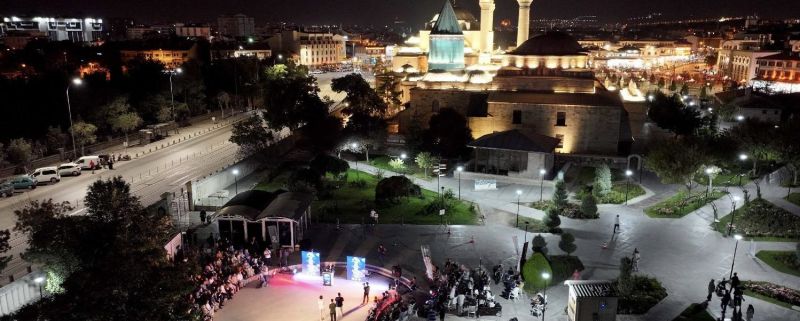
Ibn Battuta, who visited the city of Konya in the 14th century, states that during this period, separate areas were reserved for each branch of art in the Konya bazaar. He states that the area where art and trade activities are most intense is the area within the triangle of Inner Castle-Mevlana Complex and sahibi Ata Complex. During the Seljuk period, the city was built in the 13th century. Apart from the old and new bazaars, which have been known to exist since the beginning of the century, it is known that there are horse markets, herbalists’ markets, wheat markets, wood markets and markets for butchers, shoemakers, cone makers, jewelers, cotton sellers and confectioners. In addition, it is estimated that there may also have been bazaars and a sheep market belonging to cooks, head chefs, blacksmiths, confectioners, saddlers and tailors, whose existence is known in other Seljuk cities and whose names are mentioned in the tradesmen lists of Konya.
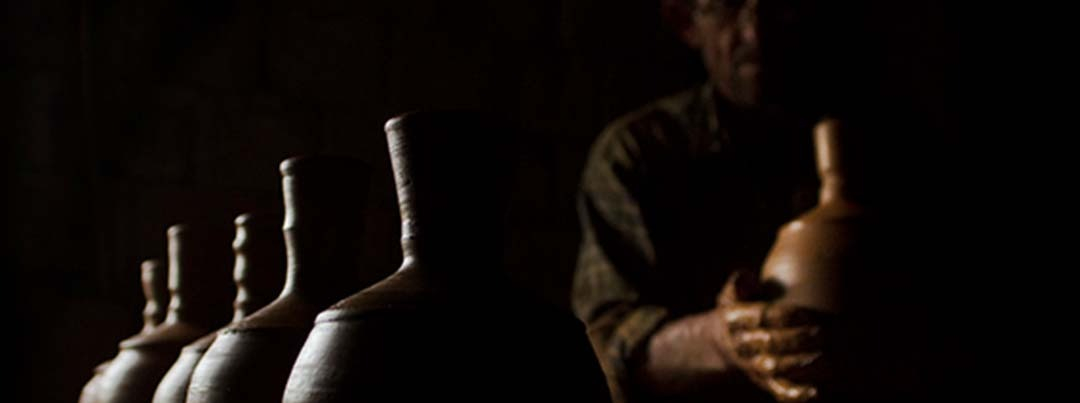
To these professions we can also add Potter, Tapestry Maker, Carpet Maker, Calligrapher, Compote Maker, Felt Worker, Tavern Keeper, Gravestone Maker, Bookbinder, Engraver, Lectern Maker, Rosary Maker and Salt Maker. It is seen that the commercial life that developed during the Seljuk period also continued during the Ottoman period. During the reign of Mehmet the Conqueror, the names of bazaars and markets such as Horse Bazaar, Bezzazistan, Ekinciler Bazaar, Old Pazar, Galle (Wheat) Market, Haffaflar, Hoşafçılar Bazaar, İplik Bazaar, Saraçlar Bazaar, Yeni Bazaar can be seen in Konya. It is known that in these bazaars and markets, in addition to dozens of shops belonging to tradesmen, there are herbalists’ markets, Bezirhane, Paint Shop, Bakery, Haffafiye, Hallaç Shop, Butcher, Jewelery, Post Sewing Shop, Sherbet Shop and Tanner Shops. In his work titled Konya in the Tulip Era, Yusuf Küçükdağ identified the bazaars and marketplaces of Konya in the Ottoman period and described the locations and physical boundaries of the bazaars. According to the information given by Küçükdağ, there were 23 inns, 34 bazaars and marketplaces in Konya in the first half of the 18th century. According to the first records from the Ottoman period, tradesmen in Konya were mostly grocers, shoemakers, cloth makers, tailors, jewelers, tinsmiths, weavers, herbalists, felt makers, construction masters, bakers, barbers, butchers, blacksmiths, silk manufacturers, coffee shops, blacksmiths, furriers, etc. were grouped into professions. It is known that the largest group of tradesmen in Konya in 1672 was grocers, tailors, covered bazaar tradesmen, tanners and bezzaz. The fabric makers, felt makers, mutaf makers, saddlers, saddle makers and cloth makers who process the raw materials produced by tanners are the most developed craft group in the city with a 30% share. Bezzazs, cullâhs, kazazs, kavuk sellers, silk sellers and hallaçs operating in the weaving industry and its sub-branches constituted the second largest group with 16% (Ürekli&Muşmal 2015: 86-97).
In his travelogue, Evliya Çelebi mentioned that Bürümcük weaving is made in Konya. Bürümcük, where natural white cotton, silk, linen and rarely wool are used as materials, is woven in the plain technique with normal twisted warp and multi-twisted weft. It is said that Bürümcük is one of the high-quality cloths of Anatolia and was woven for the palace due to its superior properties. (Türkiye Dokuma Atlası Access Date: 19.01.2024). However, today we cannot find such a profession in Konya.
While Kutnu fabric was previously produced in Konya, this profession disappeared over time and today it is mostly practiced in Gaziantep. Archaeological findings have been found in Çatalhöyük in Anatolia indicating that woven fabrics were used in 7000 BC. It reveals that weaving and hand weaving, which are textural surface techniques created with two thread systems, were known at least 9000 years ago.
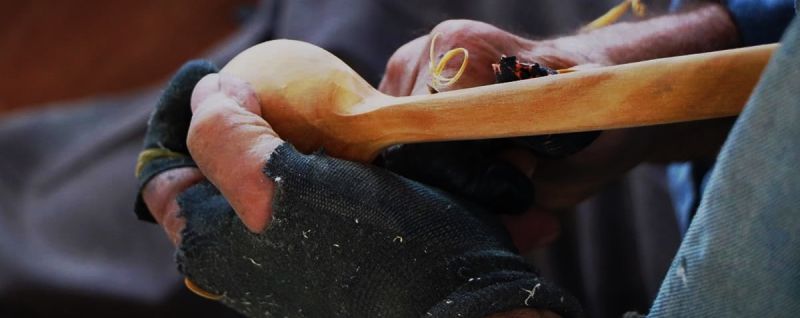
We could not find examples of another profession, Bone Shaping Art, in Konya, except for a few amateur works. However, when we look at the making of kavukluk, which is a wooden art, we come across some works, although we cannot find many written works indicating that kavukluk and lamp holders were made in Konya. And occasionally we see it used for decoration purposes in old adobe houses and even in modern buildings. We even come across many examples made in shapes such as double-headed eagles, turbans, crescents and stars.