Boyra is a kind of weaved reed and wicker building material used in the construction of soil housetops in the traditional architecture of Konya. The cogon grass utilized in the cover and eaves is gathered from the lakes and marshes surrounding Konya, together with this reed.
The reeds must first be prepped before weaving a boyra. The reeds are collected, peeled, washed, made into bundles, and dried in heaps between September and October.
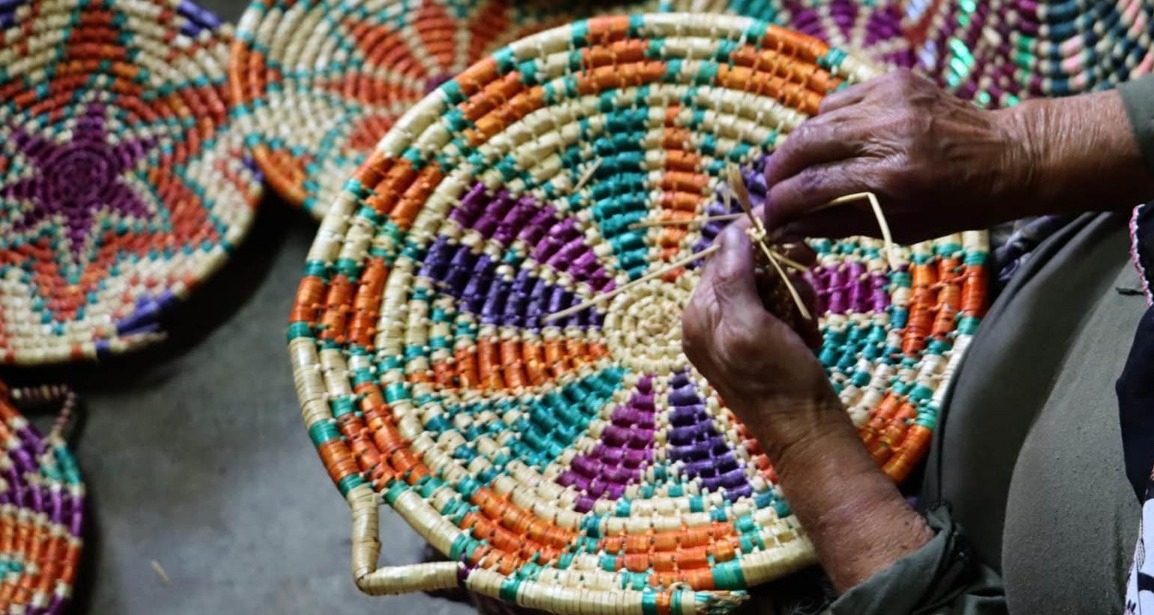
Boyra weaving is done in the shady “Hayat” sections of the houses or outdoors. The dried reed bundles are first split and made ready for weaving.
Boyra weaving is applied with two techniques around Konya:
Plain weave Boyra: It is applied on the ground without a bench. The splitted cane reeds are placed diagonally, four on the right and four on the left. The reeds are placed on top of each other in such a way as to make 100 - 110 degrees obtuse angles. Then, the weaving process continues by weaving with the same angle in the opposite direction taking care not to break the cane reed in front of the weaver.
Wired-corded Boyra: In Akşehir Doğrugöz and Beyşehir, wired and corded boyra are woven on vertical looms. Galvanized wires are wound on the reels on the metal bench. The ends of these wires are passed through the holes in the lower part of the bench. The wires at the ends of these wires are wound on the shuttles in a way that is sufficient for weaving. The prepared reeds are fixed by tightening them around the wires coming from above with the help of these shuttles. After the weaving process is finished, the edges of the boyra are straightened and folded towards the inside so that it does not open, and it is stored in rolls. Then it is ready for use.