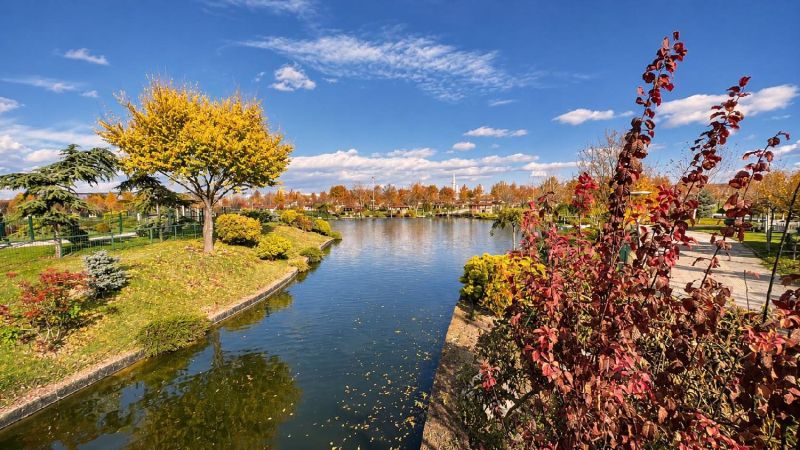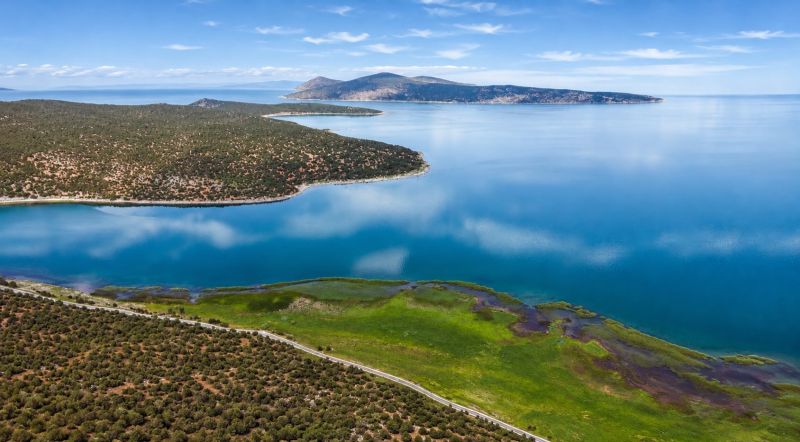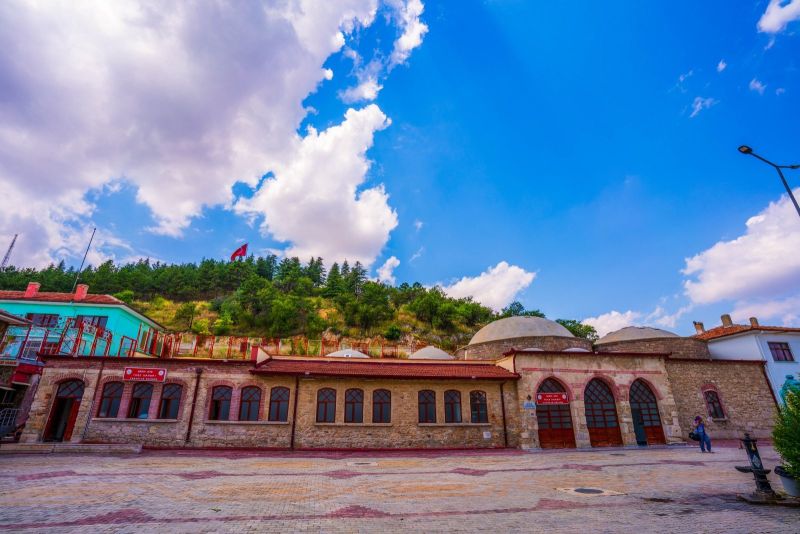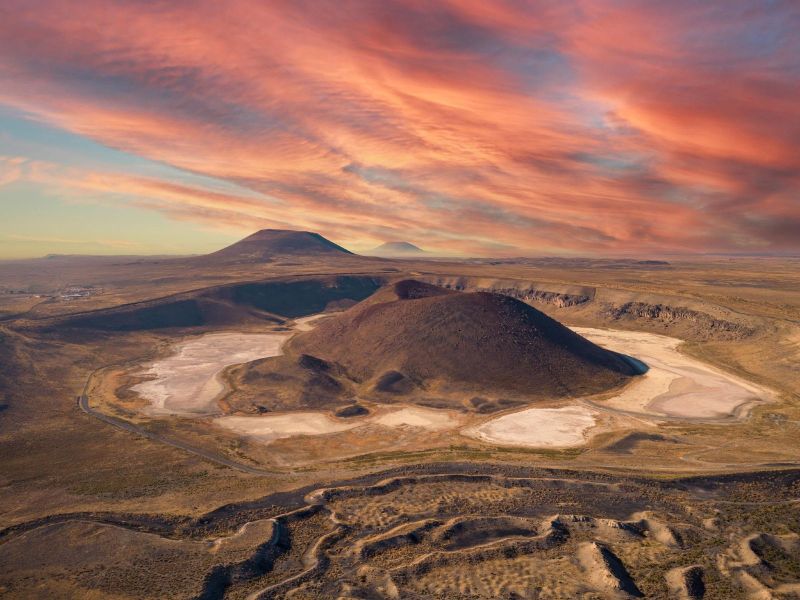
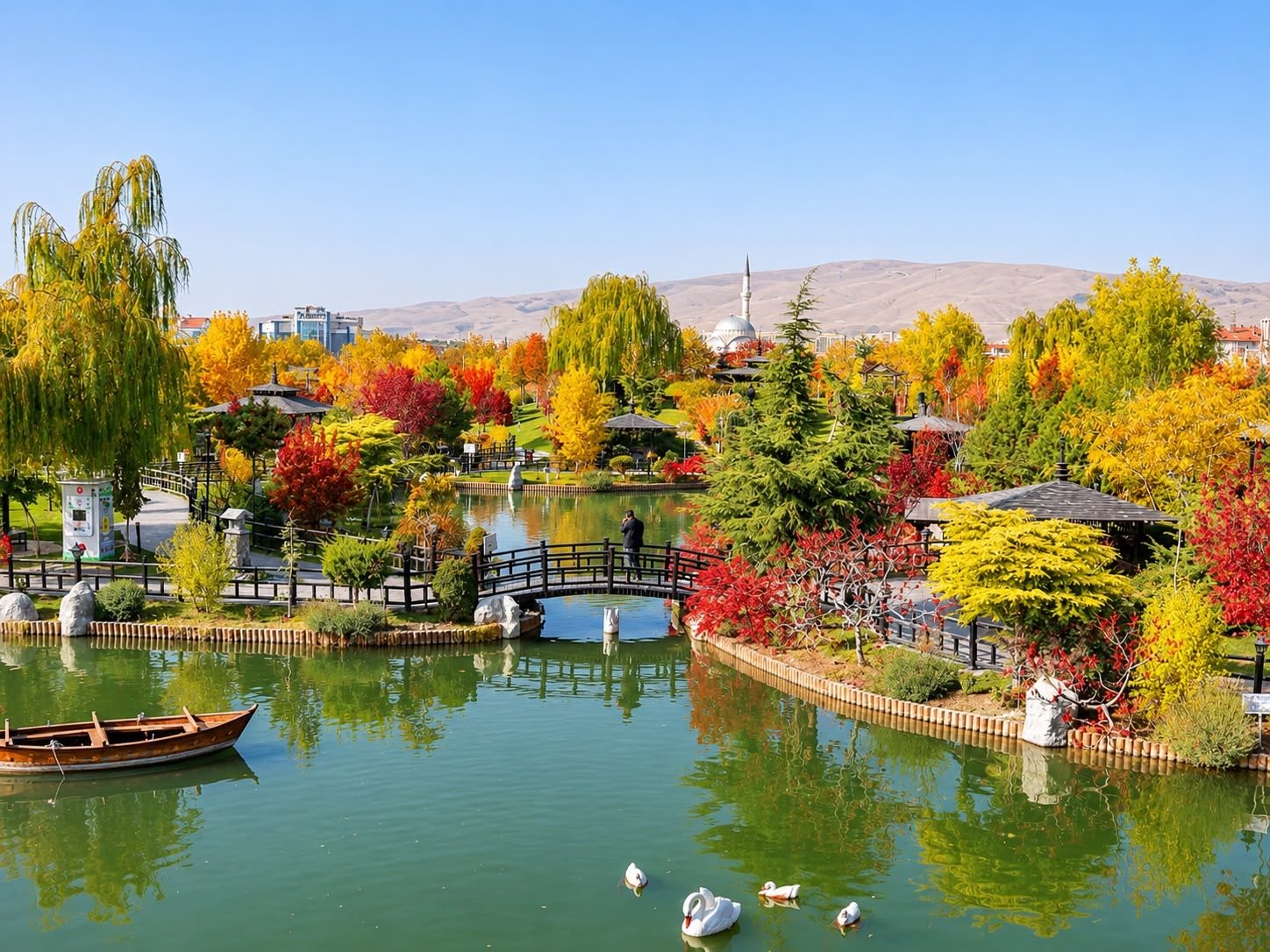
Located in the heart of Central Anatolia, Konya is known for its long history, cultural heritage and connection to Mevlana Rumi. As the former capital of the Seljuk Sultanate of Rum, the city is home to historic mosques, madrasas, museums and archaeological sites. Autumn is a good time to explore its landmarks, walk through its historic neighbourhoods and discover its local cuisine.
Here are 10 reasons to include Konya in your autumn travel plans.
1. Visit the Mevlana Museum and Discover Rumi’s Legacy
Konya is closely associated with Mevlana Jalal al-Din Rumi, the 13th-century scholar, poet and Sufi mystic. Born in Balkh in 1207, Rumi spent much of his life in Konya, where he taught and wrote about spirituality, love and human values. He died in the city on December 17, 1273, and was buried at what is now the Mevlana Museum.
The museum is one of Konya’s best-known landmarks. Its complex includes Rumi’s tomb, the Green Dome (Kubbe-i Hadra), the former dervish lodge and several exhibition rooms displaying manuscripts, musical instruments and objects related to Mevlevi culture. Visitors can also explore the life and teachings of Rumi through the historical objects preserved here.
2. Experience the Sema Ceremony
The Sema ceremony is one of the most recognised traditions associated with Konya. Performed by members of the Mevlevi tradition, the ceremony combines music, movement and spiritual symbolism.
The Mevlana Cultural Center hosts Sema performances, particularly during the annual Şeb-i Arus commemorations held in December. These events mark the anniversary of Rumi’s death and attract visitors from Türkiye and abroad. Attending a performance offers an opportunity to learn more about the traditions that have shaped Konya’s cultural identity.
3. Explore Konya’s Seljuk Heritage
Konya served as the capital of the Seljuk Sultanate of Rum during the 12th and 13th centuries. Many architectural works from this period remain part of the city’s historical landscape.
Alaeddin Hill is a good starting point. It is home to Alaeddin Mosque, one of the important examples of Seljuk religious architecture, as well as the tombs of several Seljuk rulers.
A short walk from the hill takes visitors to Karatay Madrasa, built in 1251 and now serving as the Tile Works Museum. Its interior features examples of Seljuk tile decoration. Another notable building is İnce Minareli Madrasa, which houses the Museum of Stone and Wooden Works. Its elaborately carved stone entrance is among the finest examples of Seljuk stone craftsmanship.
4. See the Ottoman Architecture of Aziziye Mosque
Konya’s architectural heritage is not limited to the Seljuk period. Aziziye Mosque, located in the city centre, is one of the notable examples of Ottoman architecture in the city.
Originally built in 1671, the mosque was later reconstructed in 1867 following a fire. Its design reflects the Baroque influences that became more visible in Ottoman architecture during the 19th century. The mosque stands out with its large windows, decorated interior and distinctive minarets.
Its central location also makes it easy to include in a walking tour of Konya’s historic centre.
5. Travel Back in Time at Çatalhöyük
For those interested in archaeology and early human history, Çatalhöyük is one of the most important places to visit in the Konya region.
Located near Çumra, approximately 45 kilometres southeast of Konya, this Neolithic settlement dates back to around 7400 BC. It was added to the UNESCO World Heritage List in 2012.
Çatalhöyük is particularly known for its closely packed mudbrick houses, which were accessed through their roofs rather than conventional streets. Excavations have also revealed wall paintings, figurines and other objects that provide information about the daily lives and beliefs of its inhabitants.
A visit to the archaeological site offers a closer look at how some of the earliest settled communities lived.
6. Discover the Historic Village of Sille
Located on the outskirts of Konya, Sille is a historic settlement with a cultural heritage shaped by different communities over many centuries.
The village is known for its traditional stone houses, narrow streets and historic religious buildings. One of its best-known landmarks is Aya Elenia Church, believed to have been built in 327 AD on the orders of Helena, the mother of Roman Emperor Constantine I.
Today, visitors can explore the restored buildings, small museums and streets that preserve much of Sille’s traditional character. Its cafés and local restaurants also make it a suitable place to take a break during a day of sightseeing.
7. Try Konya’s Traditional Dishes
Konya has a distinctive food culture, and trying its local dishes is an important part of visiting the city.
Etliekmek is perhaps the best-known local speciality. Prepared with a thin dough topped with minced meat, tomatoes, peppers and other ingredients, it is traditionally baked in a stone oven.
Another dish worth trying is fırın kebabı, a slow-cooked lamb dish that is usually served with bread. Konya is also known for its traditional soups, pastries and desserts.
Local restaurants across the city offer opportunities to sample these dishes and become familiar with the region’s culinary traditions.
8. Visit the Tropical Butterfly Garden
The Konya Tropical Butterfly Garden offers a different experience from the city’s historical attractions. Located in the Selçuklu district, it features a tropical environment where visitors can observe butterflies and plants in a controlled habitat.
The garden has a 1,600-square-metre butterfly flight area and is home to 15 butterfly species. Visitors can also learn about the different stages of a butterfly’s life, from caterpillar to adult, as well as its feeding habits and natural behaviour.
It is a particularly suitable stop for families travelling with children, although the garden is open to visitors of all ages.
9. Explore Science at Konya Science Center
Konya Science Center is another attraction worth adding to a city itinerary, especially for families and visitors interested in science and technology.
The centre features interactive exhibition galleries covering subjects such as the human body, the natural world, space and technology. Visitors can explore different scientific topics through hands-on displays and educational activities.
The planetarium also offers shows about space and astronomy. Unlike traditional museums, the centre encourages visitors to learn by interacting with the exhibits, making it an interesting option for both children and adults.
10. Spend Time in Meram
Meram offers a different side of Konya, with green spaces, walking areas and a more relaxed atmosphere away from the busy city centre.
Historically known for its gardens and natural surroundings, the district has long been a popular place for locals to spend their free time. Meram’s walking paths and outdoor areas are particularly suitable for an afternoon visit in autumn.
Visitors can take a walk, enjoy a meal at one of the local restaurants or spend some time exploring the area’s historic surroundings. It is a good way to round off a trip that includes Konya’s museums, mosques and archaeological sites.