Konya Metropolitan Municipality is contributing to the event with a high-tech application focused on environmental sustainability.
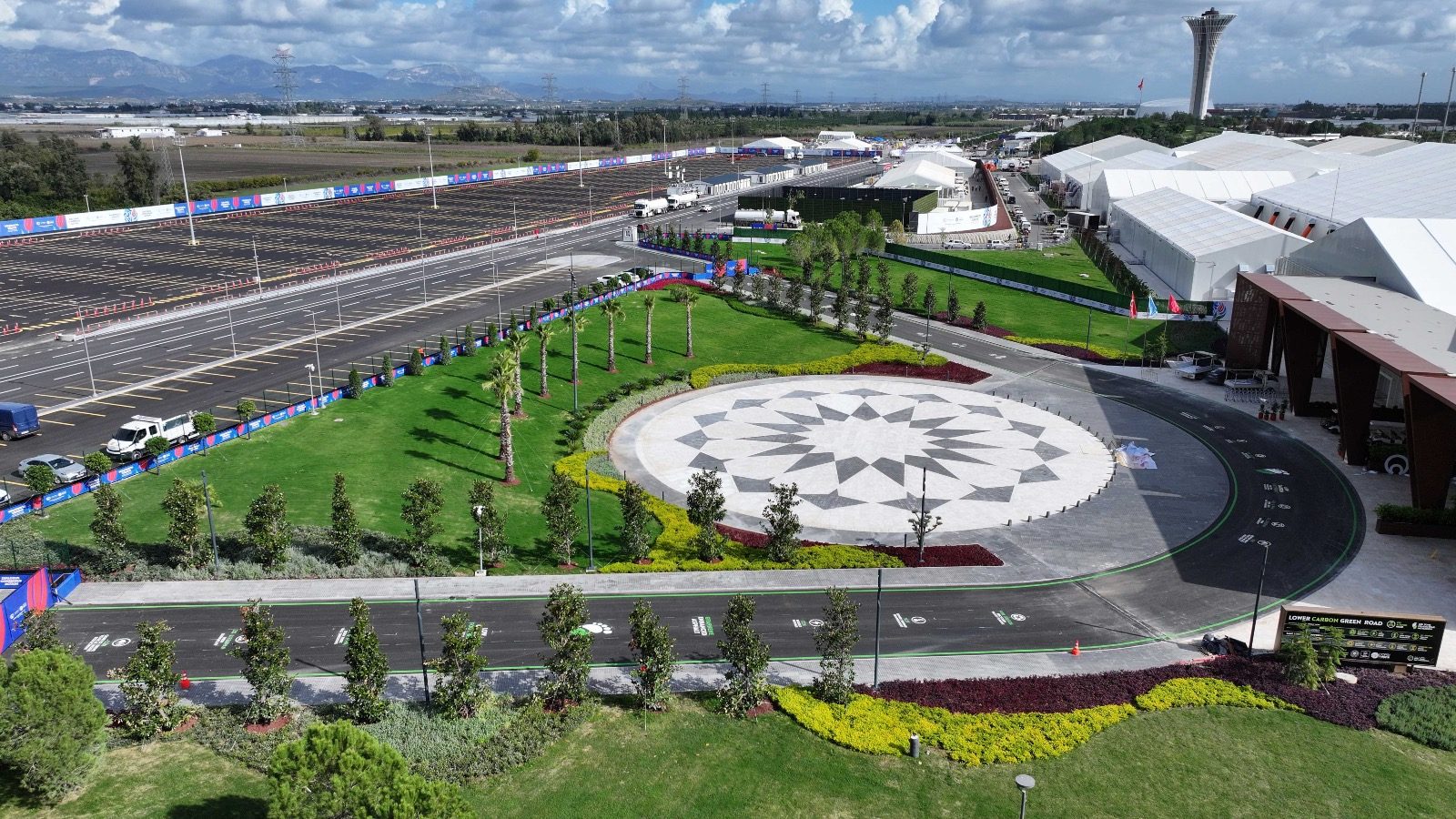
The COP31 Leaders’ Road, the route used by numerous world leaders to reach the summit venue and where President Recep Tayyip Erdoğan welcomed the leaders, was prepared using nanographene-enhanced asphalt developed by Konya Metropolitan Municipality.
As a result, an innovative environmental technology developed in Konya has become part of an infrastructure project directly used by world leaders at an international summit focused on combating climate change.
Implemented in cooperation with the Ministry of Environment, Urbanization and Climate Change and Hexagraphene Nanotechnology, the project offers an alternative to conventional asphalt applications. By bringing waste management together with transportation infrastructure, the initiative demonstrates the transformative role of technology in the fight against climate change.
Uğur İbrahim Altay, President of the Union of Municipalities of the World (UCLG), Mayor of Konya Metropolitan Municipality and COP31 Special Envoy for Local and Regional Governments, said that combating climate change requires not only environmental awareness but also science, technology and practical solutions.
Emphasizing Konya’s commitment to projects that protect the environment, use resources efficiently and set an example for the cities of the future, Mayor Altay said: “As Konya Metropolitan Municipality, we have taken on important roles at COP31, but the most valuable contribution for us is the application we carried out on the road used by world leaders. The graphene-enhanced road developed through our R&D efforts is a world first and has become one of the significant outcomes of COP31. This application, which reduces carbon emissions and plastic waste, serves as a model for the world and cities everywhere.”
PLASTIC WASTE TRANSFORMED INTO ROAD INFRASTRUCTURE THROUGH ADVANCED TECHNOLOGY
The project was implemented under the “Low-Carbon Green Road Pilot Project,” jointly conducted by the Ministry of Environment, Urbanization and Climate Change, Konya Metropolitan Municipality and Hexagraphene Nanotechnology. Through an advanced technological process based on the specialized synthesis of plastic waste with carbon, high-value-added nanographene was produced. The resulting nanographene was then used as an additive in bituminous asphalt mixtures and applied in a full-scale road project.
The project’s first pilot application was carried out along a one-kilometer stretch of road in Konya. Asphalt samples prepared using different mixture ratios and temperatures underwent scientific measurements, analyses and performance tests over 12 months in accordance with national and international standards.
Following the assessments, the asphalt mixture prepared at 140 degrees Celsius and containing 5% specially synthesized nanographene was identified as the optimum formulation in terms of balancing environmental sustainability and technical performance.
NANOGRAPHENE ASPHALT CUTS ANNUAL CARBON EMISSIONS BY 420 TONS PER KILOMETER
Compared with conventional asphalt, the nanographene-enhanced application offers significant environmental and technical benefits.
The key benefits identified for a one-kilometer road section measuring 3.5 meters in width include:
A reduction of 420 tons in annual carbon emissions
Recycling 940 kilograms of waste plastic and bringing it back into the economy
24% energy savings
Doubling the road’s service life
A 27% reduction in asphalt surface temperature
A 39% reduction in rutting
A 10% reduction in road noise caused by vehicle tires
Elimination of toxic hydrogen sulfide (H₂S) gas emissions
Certification processes to ensure compliance with international standards and alignment with the Emissions Trading System (ETS) are ongoing.