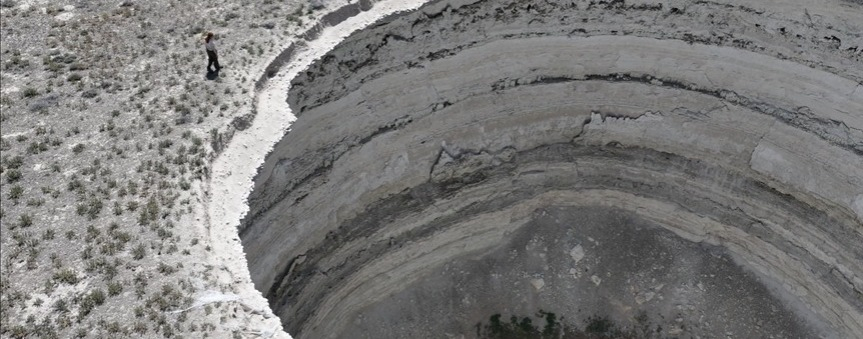
Climate change and excessive groundwater use are increasingly threatening Konya, one of Türkiye’s largest agricultural regions. Located in a closed basin with limited natural water renewal, the Konya Basin has been facing long-term drought and a rapid decline in groundwater levels. This situation is directly linked to the growing number of sinkholes observed across the region.
The main reason sinkholes form in Konya is the area’s limestone-based geological structure combined with falling groundwater levels. As underground water is withdrawn, empty spaces develop beneath the surface. Over time, these cavities collapse, creating sinkholes. In recent years, the rise in sinkholes, especially around the Karapınar area, has clearly shown how serious the problem has become.
The drying up of lakes that once supported the basin’s water balance has further increased the risk. Akşehir Lake, Meke Lake, Hotamış Lake, and Akgöl have largely lost their water, placing additional pressure on underground reserves. As surface water disappears, dependence on groundwater grows, weakening the natural structure of the soil.
Experts warn that sinkholes in Konya should not be seen as a purely natural phenomenon. Reduced rainfall due to climate change, inefficient irrigation methods, and uncontrolled groundwater extraction have turned the issue into a human-driven environmental crisis. If current practices continue, the risks to both agricultural land and nearby settlements are expected to increase.
Konya stands out as one of the clearest examples of groundwater loss in the Middle East. The situation highlights the urgent need for sustainable water management and more efficient water use in agriculture to protect both the region’s economy and its natural environment.