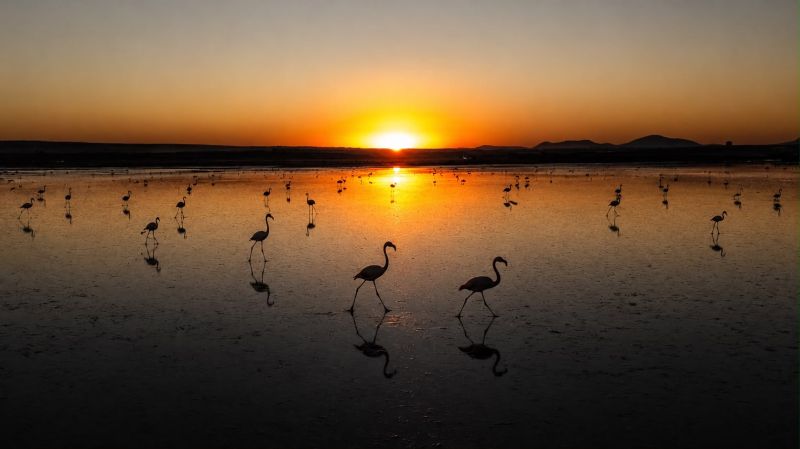
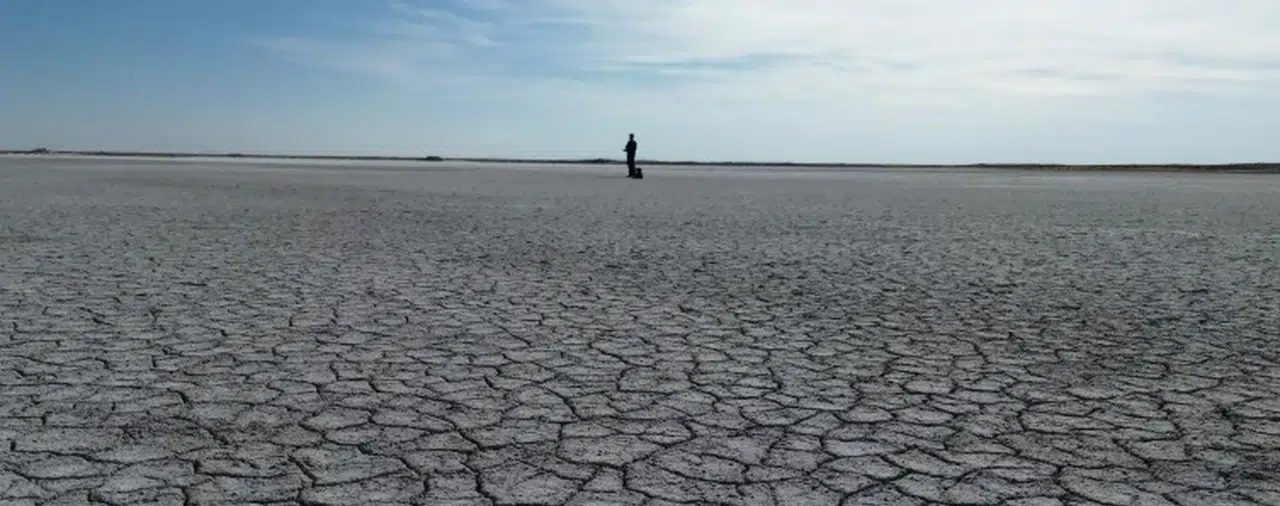
The ongoing drought at Lake Tuz, Turkey’s second-largest lake, is having a devastating impact on local wildlife and vegetation.
Located at the junction of Ankara, Konya, and Aksaray provinces in Central Anatolia, Lake Tuz is one of Turkey’s most vital wetlands for biodiversity. Its basin shelters thousands of birds, including flamingos, and supports numerous salt-tolerant endemic plants.
However, the lake has been shrinking rapidly due to rising global temperatures and reduced rainfall. Recent studies indicate that only about 9,000 hectares of the lake remain covered by water.
Experts report that Lake Tuz, situated in one of the driest regions of the country, has received almost no rainfall since spring. This lack of precipitation has caused the lake’s surface area to shrink dramatically—from the size of roughly 130,000 football fields to only 13,000.
The effects of the drought are visible even to visitors. The number of flamingos and their migration patterns clearly reflect the severity of the situation. Due to food shortages caused by the drying lake, flamingos migrated earlier this year, fewer chicks were born, and they left the area sooner than usual.
The drought is also threatening other species that depend on the lake and its salt-tolerant plants. The water loss has become so extreme that it is now possible to walk across the dry lakebed from Şereflikoçhisar in Ankara to Kulu in Konya and then to Eskil in Aksaray—a situation that highlights the scale of the crisis.
Experts warn that uncontrolled groundwater extraction for irrigation is worsening the problem. They emphasize the need for stricter water management and urge farmers to avoid growing water-intensive crops. Groundwater levels that once stood at around 30 meters have now fallen to as deep as 300 meters. This overuse has also led to the formation of sinkholes in the Konya Plain. Protecting water resources is seen as crucial to ensuring that future generations do not face even greater shortages.