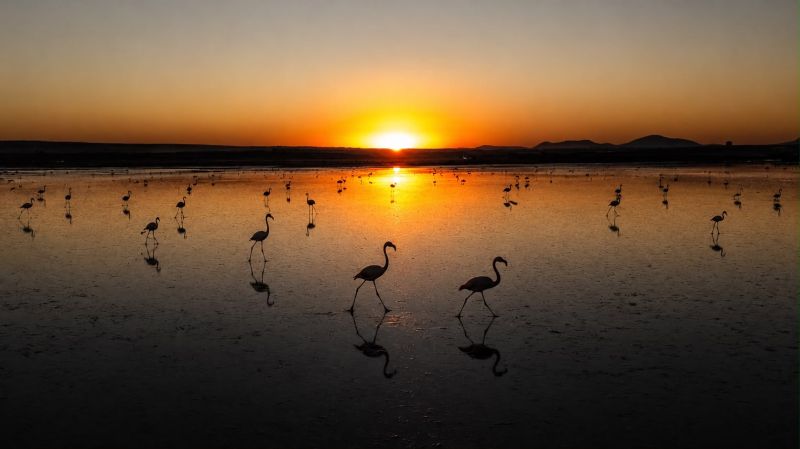
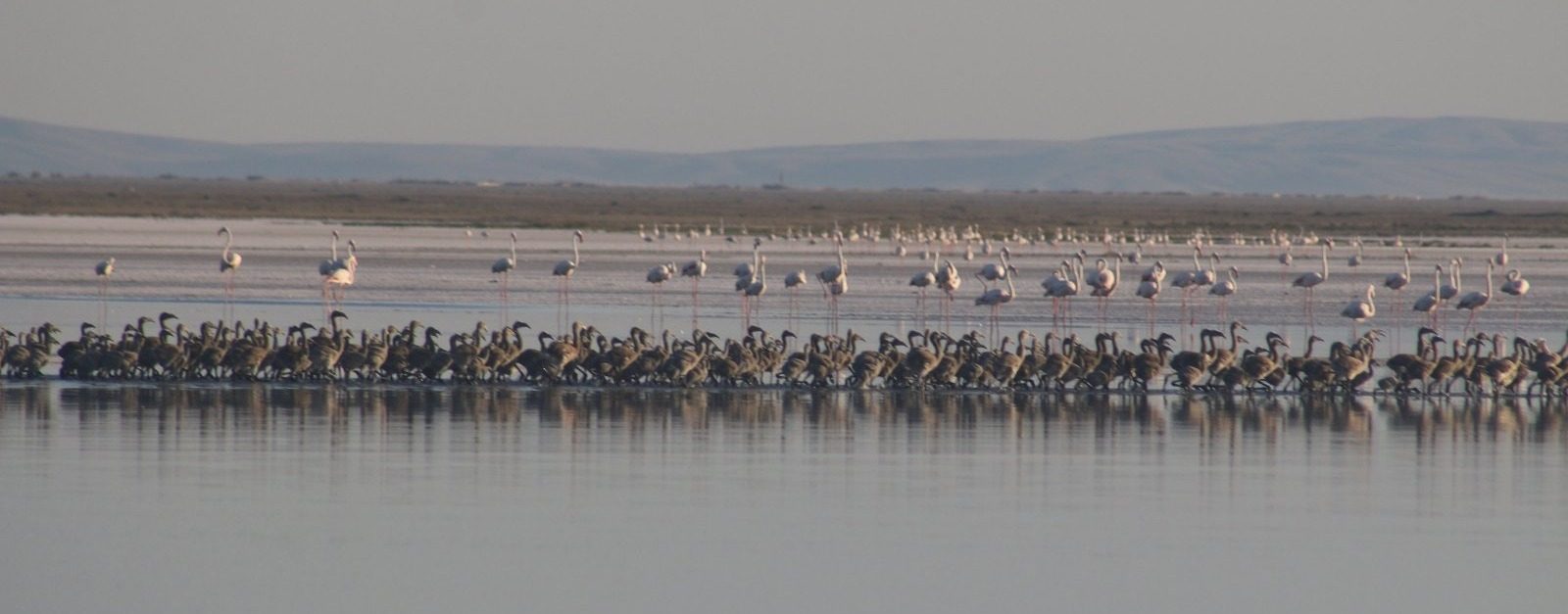
This year, 4,300 flamingo chicks have hatched in Turkey's Lake Tuz Special Environmental Protection Area, which spans the provinces of Aksaray, Kırıkkale, and Konya.
The Ministry of Environment, Urbanization, and Climate Change is carrying out the Lake Tuz Special Environmental Protection Area Species and Habitats Research, Protection, and Monitoring Project to preserve and protect endangered species and ensure their survival for future generations.
As part of this initiative, the flamingo population is being monitored in Lake Tuz, which is one of the world's most significant wetlands for flamingo nesting.
Professor Ahmet Karataş from Niğde Ömer Halisdemir University's Faculty of Science and Arts, who coordinates the project, mentioned that Lake Tuz is one of the most crucial breeding grounds for flamingos.
Karataş explained that flamingos, a bird species native to the Mediterranean Basin, prefer saline wetlands and are found in lakes and marshes from Spain to Kazakhstan. Lake Tuz is the largest breeding colony within these areas. Foreign bird watchers first discovered a breeding colony in Lake Tuz in the 1990s. The breeding area is located in the inner part of the lake, where chicks emerge from nests on sandbanks slightly above the water. These chicks have been counted for approximately 20 years through the project run by the Ministry of Environment, Urbanization and Climate Change.
Karataş noted that the number of flamingo chicks has decreased this year, saying: "Our study shows that the number of chicks has reached 4,300 this year. This is the number of chicks that have hatched this year. The environment is experiencing severe drought. Our region is one of the driest places in Türkiye. Additionally, there is agriculture involving water-dependent plants in the area. Groundwater levels have significantly dropped."