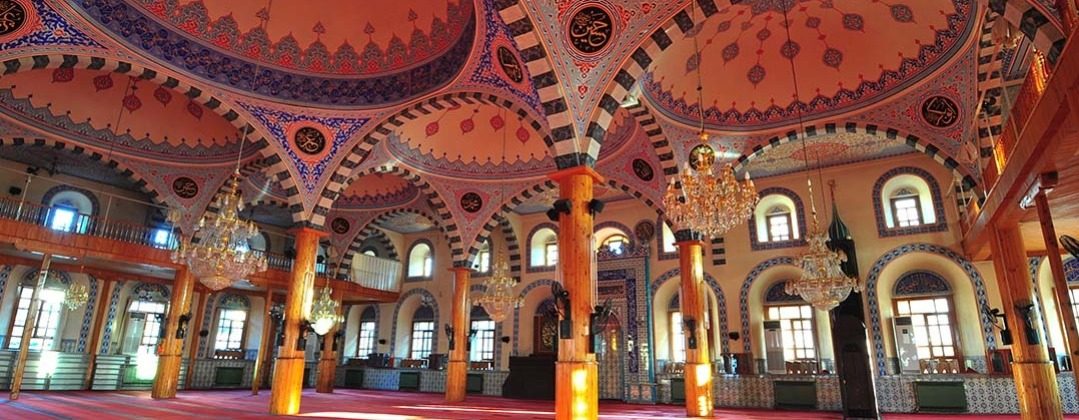
Mahya is a Ramadan tradition that has lived for centuries. The mosque ridges, which were given great importance especially in the Ottoman period, were carefully prepared and eagerly awaited. It was made by hanging small oil lamps from a rope stretched between two minarets. The purpose of this tradition was both to make people experience the joy of Ramadan and to remind them to express their gratitude.
Ridges, which can be easily prepared with light bulbs today, used to be prepared as a result of a very laborious process. A thick rope was stretched between the balconies of the two minarets, hooks were attached to these ropes and hundreds of oil lamps were hung. It was also very difficult to light the oil lamps in the short time between iftar and tarawih. Mahya makers worked all day long, preparing different ridges. Abdüllatif Efendi (d. 1877) is one of the most famous mahyagi with her “Hünkar Kayığı” ridge, which he installed on the minarets of the Süleymaniye Mosque on the 15th night of Ramadan. The mobile ridges built on the minarets of the Süleymeniye Mosque were also very popular with the public. In these ridges, moving boats and fish on the bridge and cars walking on the bridge were animated.
The ridges would be written in the first 15 days of Ramadan and illustrated in the second 15 days. On the 15th day of Ramadan, ridges such as swings, towers and double boats were hung, which the children watched with adoration.