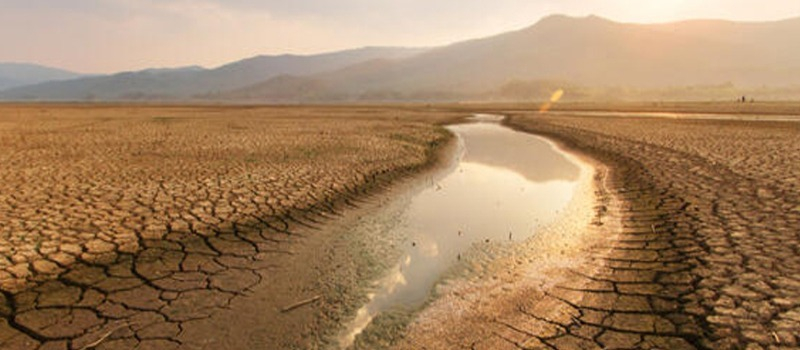
Konya Plain, known as Turkey’s crisis warehouse, is facing drought in underground water supply. While regional production water in the region was divided into 50 meters, it was reported that some systems did not produce water from wells drilled up to 400 meters. Three times more of the 40 thousand registered wells were labeled as unregistered wells, showing that the management based on the water available for use is not very sustainable.
In Konya, where 67 percent of its surface area is used as agricultural land, 2 million 300 thousand 140 decares of agricultural land were irrigated in the 2022 irrigation season. While the number of registered wells for irrigation in the lands is around 40 thousand, there are three times as many unregistered irrigation wells. Due to the failure to monitor the unregistered wells and wild irrigation, underground water resources retreated up to 50 meters. It has been recorded that in the northern part of the plain, no water comes out of the wells drilled up to 400 meters.
“THE DECLINE OF THE GROUND LEVEL FOLLOWS AN INCREASING COURSE”
Konya Technical University Obruk Application and Research Center Director Prof. Dr. Fetullah Arık stated that “Underground water resources have been used in Konya since the 1960s. After the 1960s, the use of underground water resources, especially irrigation, which first started in the Çumra basin, later became widespread in many parts of the basin. In this region, they made extensive use of local water in addition to surface irrigation. There were wells that have been drilled by our State Water Works or by citizens in a documented manner. This number of wells is currently approximately 40 thousand in the basin. In the 1960s, water near the surface continued to decline. Groundwater changes, which were measured in centimeters in the first years, started to increase noticeably at the level of half to 1 meter in the following years, especially after the 1980s. The decrease in underground level began to be expressed in these meters after the 2000s. After 2015, it says a few meters. In other words, the decrease in the ground level follows an increasing trend.
Illegal water wells in many parts of the basin
Prof.Dr. Arık pointed out that “4.5 billion cubic meters of water is used in the Konya Basin annually”. He said that “The production of plants that consume a lot of water in the basin is becoming increasingly widespread. There is also a proliferation of these areas. Especially plants such as sugar beet, corn, sunflower, forage crops, alfalfa and silage corn have to be watered throughout the season. The demand for groundwater is increasing. In addition to around 40 thousand documented and licensed wells in the region, there are three times as many illegal wells. There is no definitive data on how much water is consumed, especially in wells drilled without permission. When we look at the basin, there is an average annual water use of 4.5 billion cubic meters. 2 billion cubic meters of this water is provided by surface water. The same amount is met by groundwater. The basin that benefits from the most groundwater in our country is the Konya Closed Basin. When we look at this basin, based on general consumption, we can see that there is a very serious water consumption outside the wells recorded by the State Hydraulic Works. Unfortunately, even now, illegal wells continue to be opened in many regions of the Basin. Opening illegal wells not only makes it difficult to control water use, but also poses a danger of mixing unqualified water levels with qualified water levels.”