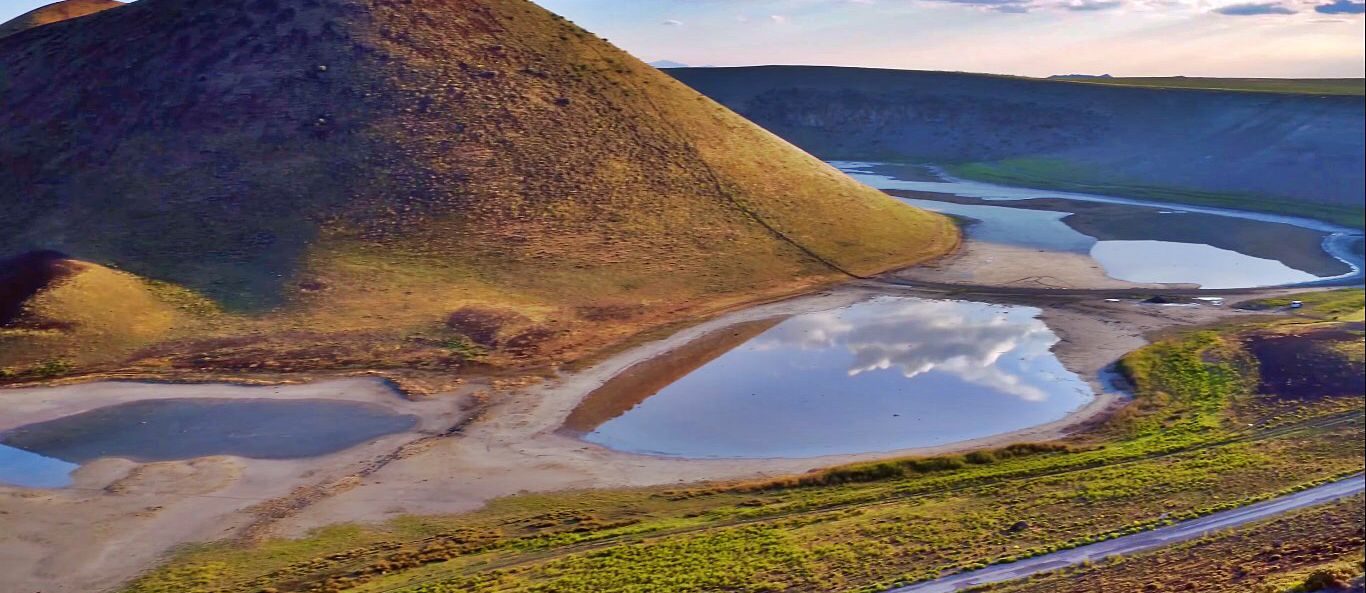
Geoscientists from various countries who came to Turkey within the framework of the Regional Geomorphology Congress conducted research in the sinkholes of Konya's Karapınar district and at Meke Lake.
As part of the Regional Geomorphology Congress, fieldwork was conducted in Karapınar and its surroundings with participants from various countries including Poland, Slovenia, Nigeria, Japan, Hungary, Australia, and India who came to Turkey.
The participants visited the sinkholes in Kızören and Çıralı and had the opportunity to examine Meke Lake. During the trip, Assoc. Prof. Dr. Muhammet Zeynel Öztürk from the Geography Department of Niğde Ömer Halisdemir University provided information about Meke Lake to the participants.
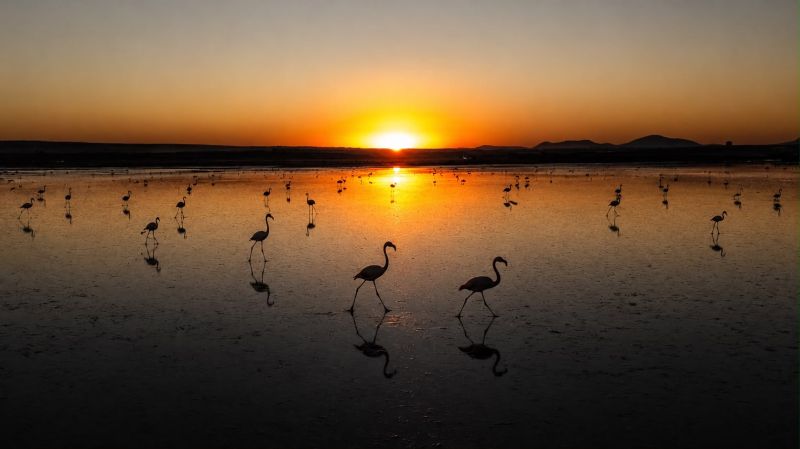
Assoc. Prof. Dr. Muhammet Zeynel Öztürk, who reminded that Meke Lake was formed as a result of volcanic eruptions, stated, "The crater formed as a result of volcanic eruption gradually filled with water and turned into a lake. Meke Lake, which is one of the natural wonders where migratory birds take a break over Turkey and is fed by underground water sources, used to have a depth of approximately 12 meters, but its natural beauty began to disappear in the early 2000s. Today, Meke Lake can no longer be nourished by underground waters, and due to insufficient rainfall, the beauty of the area has vanished."
The researchers also emphasized the potential danger of sinkhole formations and stressed the importance of taking precautions. They noted that sinkholes are, in a way, impressive geological features. Splea Conc, who participated from Slovenia, expressed sadness at the sight of Meke Lake and underscored the need for global awareness regarding the issue of drought around the world.