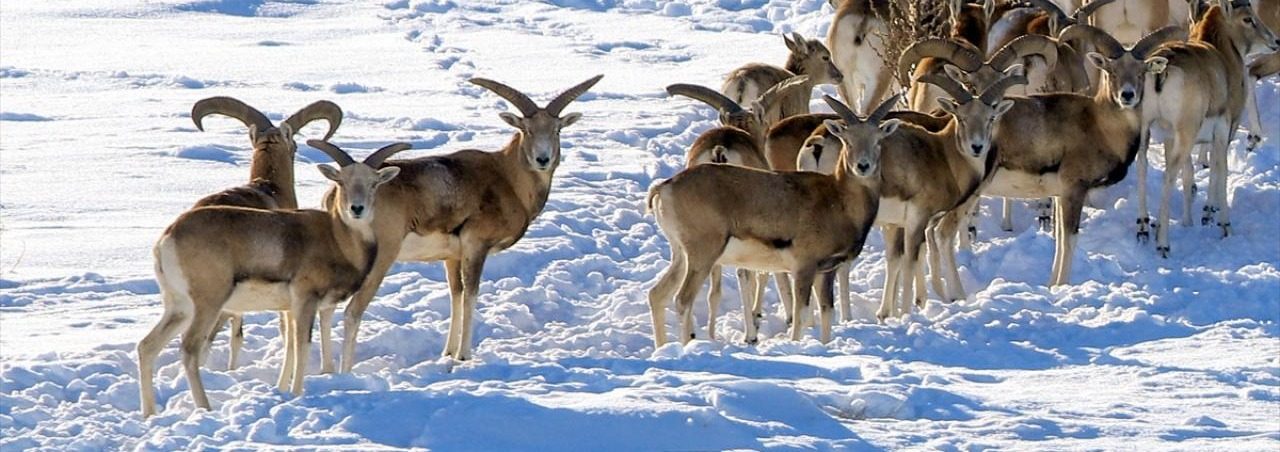
Anatolian wild sheep, which is one of Turkey's endemic species and called "ceren" among the people because of its large and beautiful eyes, is followed with cameras 24/7 in an area of 60 thousand hectares in Konya.
Anatolian wild sheep, one of the species unique to Turkey, are meticulously protected at the Bozdağ Wildlife Development Center in Konya. Anatolian wild sheep, which continue to exist in 60 thousand hectares of habitat within the 8th Regional Directorate of Nature Conservation and National Parks, attract the attention of those who see it with their imposing structures.
Wild sheep live in groups in the steppe where the mountain range is located between 1000 and 1700 altitudes. Wild sheep, one of Turkey's endemic animal species, are kept under surveillance with cameras 24 hours a day to ensure their reproduction and the continuity of their species.
Fed with Natural Products
Nature Conservation and National Parks 8th Regional Director Gültekin Aksan said that “Bozdağ Wildlife Development Center is an area where Anatolian wild sheep are raised, their number has increased, and they are sent all over the country. In addition to protection and reproduction, we feed Anatolian wild sheep with natural stuff when there is a lot of snow. Due to the harsh winter conditions this year, we only fed around 16 tons in January. Our feed amount last year was around 60 tons. However, this year we think that we will exceed this figure. We also give natural products that these animals need, such as alfalfa and hay for feeding.”
Continuity of the species in 8 cities
Aksan stated that “There are over 700 wild sheep in the center this year. For the continuation of the species, the animals were sent to various provinces. The wild sheep that breed here are transferred to places with this climate type and altitude in Anatolia throughout the year, and their reproduction is ensured by monitoring. We had good results in the provinces where we sent Anatolian wild sheep before. For example, the number of 20
Anatolian wild sheep transferred to Karadağ Wildlife Development Center in Karaman exceeded 200.”
No Danger of Extinction
Aksan pointed out that “The numbers of Anatolian wild sheep decreased to 40 in the 1960s. At that time, wild sheep were in danger of extinction. However, as a result of the studies carried out since then, their number is over 1000 in our region. When we include the other transferred provinces in this number, there is a population of around 1400. By spreading this population to Anatolia, we both diversify and enable it to continue its existence in another region and transfer the species to future generations in case their numbers go into trouble in one region. The danger of extinction of the species is no longer in question under normal conditions. As these studies continue, the number of wild sheep will continue to increase."