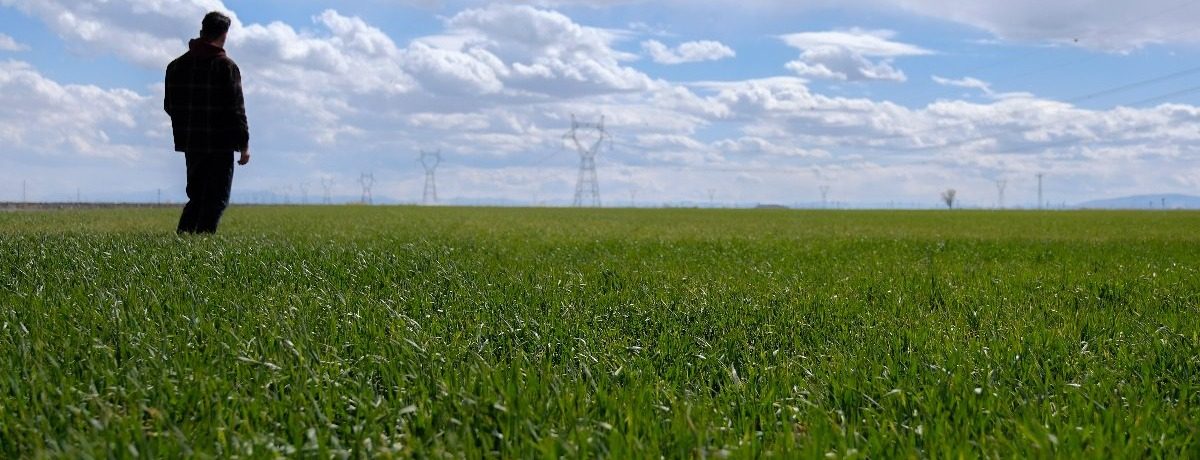
In the Konya Plain, known as the granary of Turkey, the dry winter months have been a concern for farmers, but the rainfall in March had a positive impact on the fields.
Professor Dr. Süleyman Soylu, a faculty member at Selçuk University's Faculty of Agriculture, stated that while 340 millimeters of rainfall occurred between planting and April of last year, only 281 millimeters of rainfall occurred during the same period this year in the plain. Out of this year's total, 81 millimeters of rainfall occurred in March. The rainfall in March has greatly relieved the wheat and barley planting areas that are currently in the field.
Konya, which has a planting area of 2.2 million hectares, produces approximately 2.5 million tons of wheat per year. In the grain season of the Konya Plain, also known as the granary of Turkey, the expected rainfall did not occur.
Professor Dr. Soylu stated that no water transfer could be made to the plain from the Beyşehir Lake and Suğla Storage Basin, which feed the Konya Plain, this year. He added, “The plain does not only produce wheat and barley. All plant groups, especially sugar beet, corn, and sunflower, are grown under irrigated conditions in spring crops. Unfortunately, due to drought, water cannot be provided to the plain from Konya's two major surface water sources, Beyşehir Lake and Suğla Storage Basin, this year. This inevitably eliminates the possibility of irrigation in some areas for spring crops.”